
A Lesson on Creativity & Intention as Observed by Martine Sitbon
On duality, instinct, and the act of building a world of your own.
There are a few things I love about C’est Cool. The first is that I get to follow my curiosity wherever it leads. Sometimes that feels like a clear path. Sometimes, like this week, it feels like a maze.
It began with a single photograph. A red dress. The kind of image that makes you sit up straighter and ask, Who made this? When I couldn’t find the designer, I went looking for the photographer. Then the art director. And then, almost accidentally, I found myself staring into the world of Martine Sitbon.
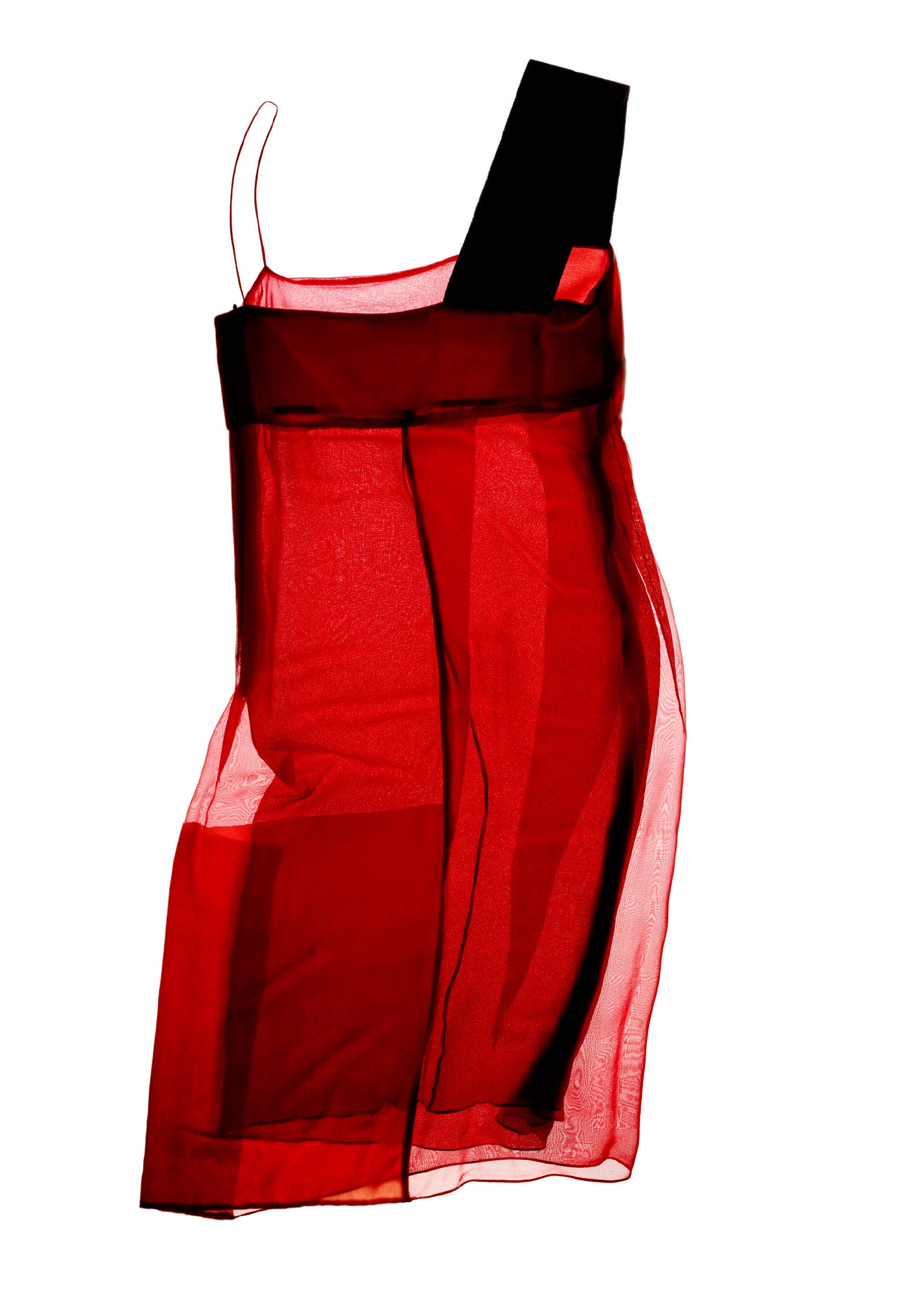
It felt like opening a door into a room I didn’t know existed but somehow recognized. A room full of contradiction, quiet confidence, imagination that held its own shape. A room where nothing demanded your attention but everything earned it.
Some of you may already know her story. The Casablanca-born, Rome-raised, Paris-shaped designer; the woman who led Chloé before Phoebe; the collaborator whose work created space for names like Laurent, Arik Bitton, Phoebe Philo, and Isabel Marant in their early years. Some of you may have her book on your coffee table, Kate Moss staring back in black-and-white.
I didn’t. Not in the way I do now.
The deeper I went, the more I kept circling the same thought: Some people build brands. Martine Sitbon built an experience.
A experience centered of instinct and tension. A world made of that rare kind of femininity. Not fragile, not performative, not concerned with approval. A femininity that allowed contradictions to exist without apology.
This is not a story about commercial success. This is a story about staying with your voice long enough to understand it.
The Making of a Sensibility
Sitbon’s upbringing reads like a map of cultural influence: Casablanca. Rome. Paris.
Morocco gave her sun and color. Rome gave her edge and attitude — sisters with Italian boyfriends, boys in leather jackets on Vespas. Paris gave her a direction.
Fashion showed up as memory before it became career. She recalls her mother’s Saint Laurent suits, the structure and ease, the confidence stitched into them. And yet when she tried to work at Rive Gauche, the boutique didn’t know what to do with her.
She walked in wearing fishnets and dark eyeliner. They said no.
Her sister said something different. She encouraged Martine to apply to Studio Berçot, the legendary Paris fashion institute known for nurturing sensibility more than perfection. From the moment she met its director, Marie Rucki, she felt understood.
There are moments in a life when something clicks. This was one of hers.
A Woman Who Refused to Perform
She launched her own label in the mid-80s and, in 1987, became the first woman to lead Chloé since its founder, Gaby Aghion. A milestone. A shift in perspective. A woman stepping into a house built by a woman, reshaping what modern femininity could feel like.
Her approach had a quiet clarity. Silk skirts with oversized jackets. Bias dresses with utility coats. Softness structured enough to stand on its own. She didn’t use fashion as a microphone. She used it as a language.
Her work wasn’t about being seen. It was about being felt.
And that is a rare thing, then and now.
The World She Built
When Sitbon returned to her own label in the 1990s, she began to construct something deeper: an aesthetic that extended beyond the clothes. Her boutiques in Paris felt more like private worlds than shops — intimate, intelligent, held together by irony and instinct.
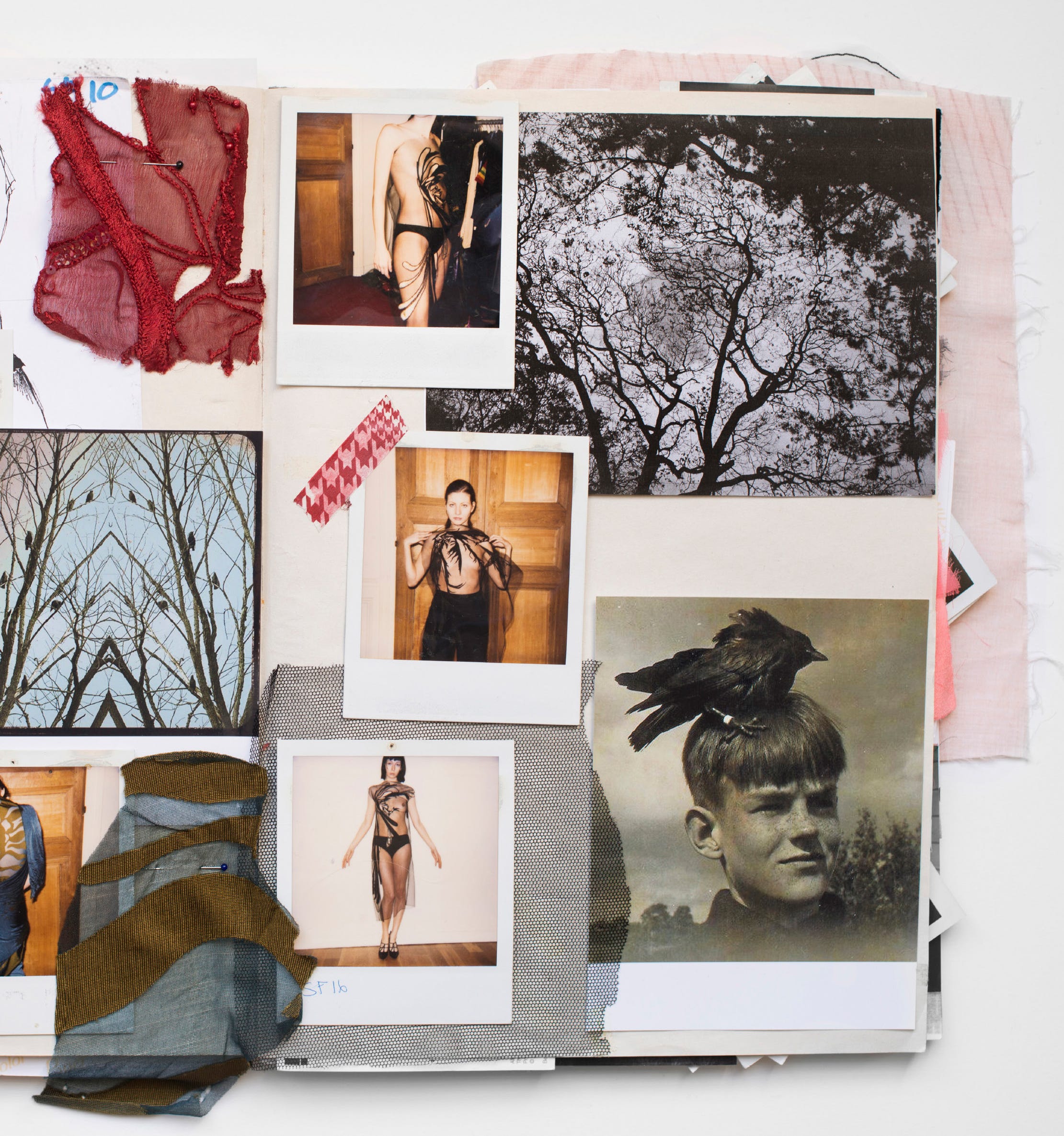
She worked closely with her partner Marc Ascoli, producing campaigns and books that felt like miniature exhibitions. She collaborated with photographers and artists whose eyes aligned with hers. She didn’t just design collections; she designed moods.
In 2006, she launched Rue du Mail, a studio committed to research, process, and craft. The kind of place where the work moved slowly enough to breathe. Where fabrics mattered. Where shapes were explored like ideas. Where experimentation wasn’t a marketing hook. It was the way.
Sitbon never chased trends. Instead, she followed curiosity.
Redefining Femininity Without Announcing It
Sitbon didn’t talk about gender or identity as theory. She simply designed in a way that disrupted the binaries of the time. She mixed romance with grit. Fluidity with structure. Masculine proportions with the kind of softness that didn’t read as decoration, but strength.
She wasn’t trying to be subversive. She was trying to be honest.
And she made space for others while doing it. Designers who passed through her world took with them the sense that fashion didn’t need to shout to be powerful.
Sitbon showed that quiet can be radical. That restraint can have depth. That softness can be an armor.
The Heart of Her Work
Sitbon’s clothes live in the space between instinct and intention. They’re garments that ask you to look twice — not because they’re loud, but because they’re layered.
There are clothes that whisper. There are clothes that scream. And then there are clothes that invite you into a conversation.
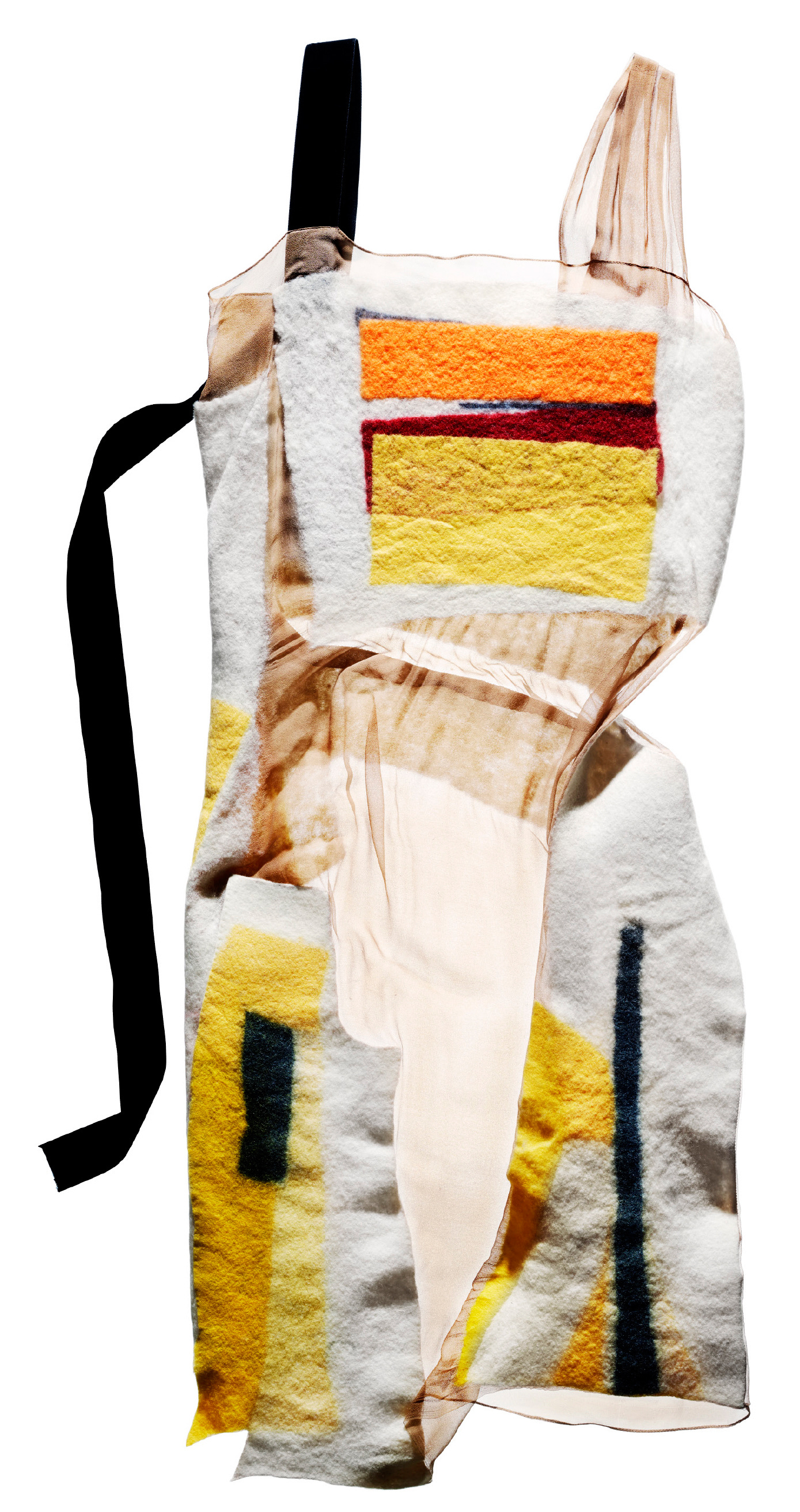
Martine Sitbon’s work always fell into the third category.
She designed for people who think. People who feel. People who understand that dressing is a form of self-awareness, not performance.
What Evolution Looks Like When You Don’t Abandon Yourself
Her most recent chapter, REv, didn’t repackage the past for nostalgia or commerce. It turned the archive inward, asking: What did these pieces mean then? What could they mean now?
It’s not reinvention. It’s continuity. A slow turning of the same idea, seen from a new angle.
There is honesty in that — a refusal to chase newness for the sake of it. A commitment to letting her own language evolve without losing fluency.
Why Her Story Matters Now
Martine Sitbon’s work reminds us that creativity isn’t a performance. It’s a practice. It’s a constant negotiation with curiosity, instinct, and the world around us. It’s the quiet courage to build a vision even if the culture is moving quickly and loudly in other directions.
What stays with me most is not one collection or one dress or one campaign, but her steadiness. Her belief in duality. Her refusal to simplify. Her patience in letting ideas find their form.
Her clothes don’t try to define you. They make room for you.
And maybe that’s the lesson: The most enduring work isn’t the work that shouts. It’s the work that stays.
Speak soon,
Kelly