
Alexandra Cadiz and the Creative Life That Refuses to Be Singular
On building Ceramicah, working beside the person you love, and learning to trust the life that unfolds slowly.
On a quiet stretch of the pandemic, in an apartment slowly filling with clay, a ceramic lamp began to take shape. Not as a product launch or a business strategy, but as an experiment between two people who had spent most of their adult lives building careers that looked sensible on paper. Micah sat at the kitchen table pulling apart electrical components, studying the anatomy of other lamps to understand how they worked. Alex watched the proportions, thinking about how the object might feel inside a room, the same way she would evaluate furniture within an interior.
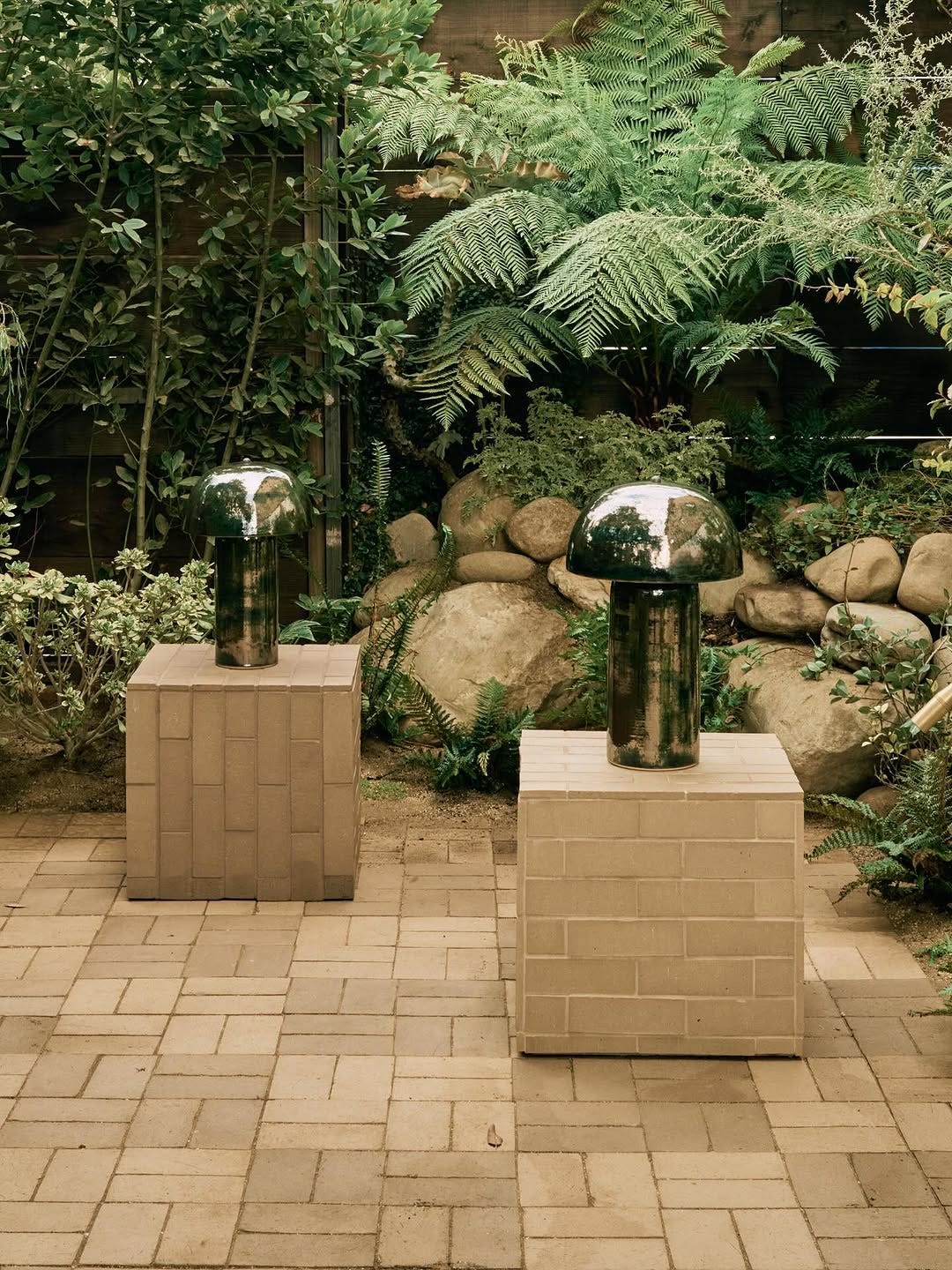
At night they adjusted the shape together. Should the cylinder be taller? Should the base widen slightly? Would the balance feel softer if the bowl opened more? There was no Shopify site, no roadmap for what it would become, only curiosity and the quiet stretch of time the pandemic had unexpectedly given them.
Today that lamp forms the foundation of Ceramicah, a design studio whose handmade lighting now lives in homes and projects around the world. But the story of the company is not simply about entrepreneurship. It is also about the experience of a woman in one of the first generations granted real permission to be many things at once, and the slow process of figuring out how those identities coexist in real life.
⚀
Alex and Micah met in architecture school when they were nineteen and twenty. Their relationship unfolded alongside the early stages of adulthood, a decade spent building careers, moving cities, and gradually shaping the lives they wanted. “We’ve basically spent our entire twenties together,” Alex says. “Which also means we’ve watched each other change completely.”
Architecture had always been part of Alex’s orbit. Her father and grandfather were architects, and for a long time the profession felt less like a choice than a continuation of family history. Yet even as she studied it, she knew she did not want to inherit that path exactly as it had been handed to her. “I remember thinking, I don’t want to take over your company,” she says. “I want to build something that’s mine.”
After graduating she moved to Los Angeles and began working in interior design, eventually launching her own firm. Micah moved toward real estate development, drawn to the broader world of buildings rather than the practice of designing them. Both careers allowed for creativity in their own ways, but ceramics had always lived somewhere deeper for him. In high school he took ceramics class five different times, eventually convincing his parents to buy him a kiln off Craigslist. Like many early creative instincts, it had simply been filed away as impractical.
When the pandemic arrived, the rhythm of their professional lives shifted almost overnight. Real estate slowed dramatically, while Alex’s interior design business suddenly accelerated as people began rethinking their homes. For the first time in years Micah found himself with something rare: time without expectation.
He returned to clay almost instinctively. At first the pieces were simple vessels, bowls and vases that allowed him to rediscover the tactile process of shaping something by hand. Eventually curiosity led him toward something more complicated. He began experimenting with lamps, ordering electrical components online and reverse engineering other fixtures to understand their structure.
Alex watched the process through the lens of a designer accustomed to thinking about proportion and atmosphere within a room. “He operates from this deep curiosity about how things work,” she says. “And I operate from curiosity about how things feel.” The combination created a quiet dynamic between them, one focused on mechanics and the other on experience.
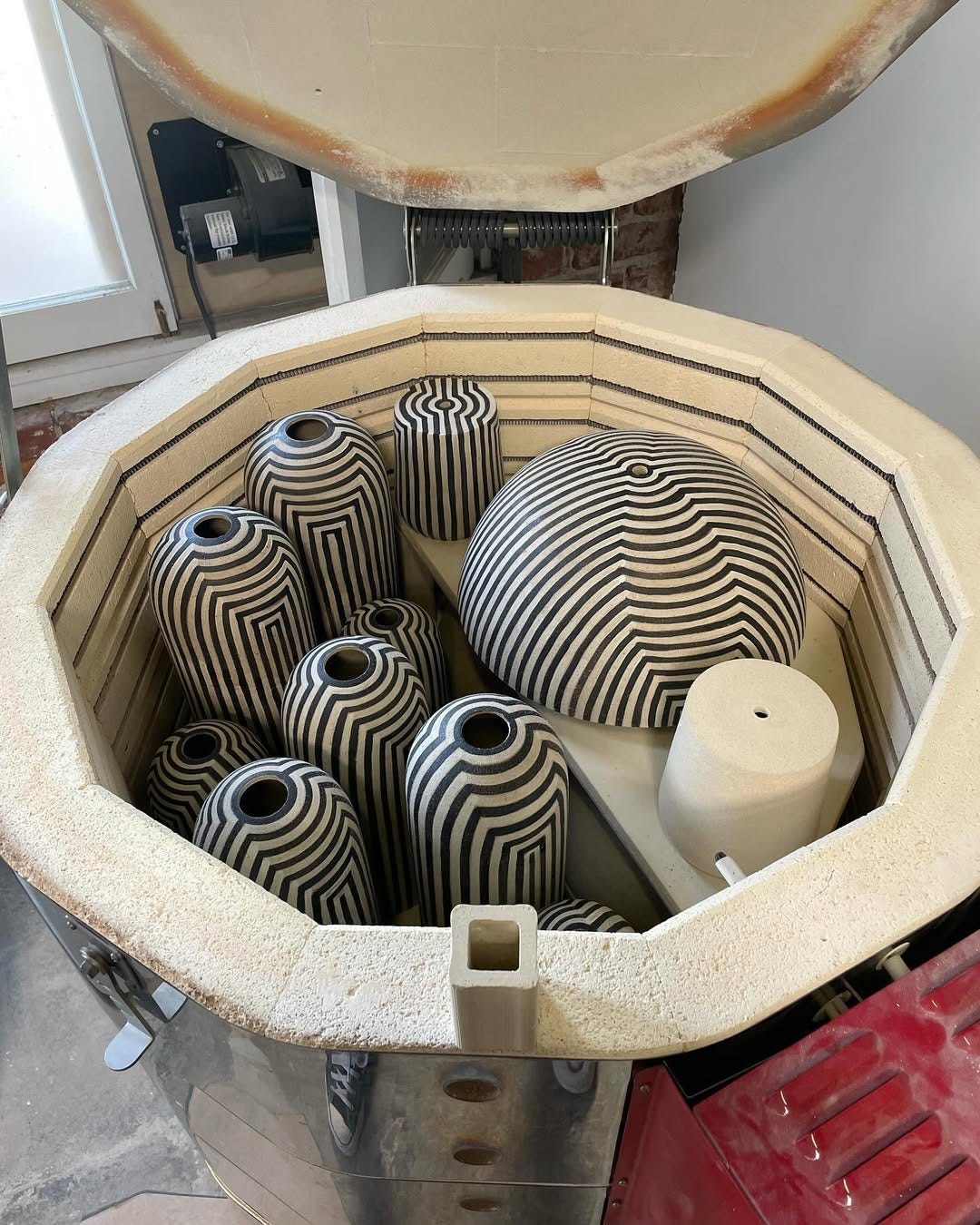
By 2021 Alex had reached a point of exhaustion with her interior design firm. After years of juggling clients and projects, she stepped away from taking on new work just as the lamps Micah had been making began attracting attention online. At the time Ceramicah barely existed as a formal company. The website had no checkout functionality, and customers discovered the pieces through Instagram before sending direct messages asking if one was available.
Orders were invoiced manually. Their living room slowly transformed into a shipping station while the second bedroom became a makeshift workshop. Clay dust found its way onto nearly every surface of the apartment, and they kept track of orders on a handwritten list marked with Roman numerals. “We were just winging it,” Alex says now. “I think people feel like they need everything perfect before they start. But you don’t. You just need enough proof that someone cares.”
The moment the business began to feel real arrived through a Los Angeles design showroom called Lawson-Fenning. The introduction came through Alex’s network from her years working in interior design, a career she had only recently stepped away from as Ceramicah began to take shape. Through a chain of mutual connections, the showroom discovered the lamps and decided to carry them. For a studio still in it’s early stages, the exposure was significant.
In hindsight, the moment feels less like coincidence and more like continuity. The relationships Alex had spent years building in one creative world quietly resurfaced to support another.
The partnership also clarified something Alex had understood instinctively from the beginning: positioning matters. Handmade ceramics often live in craft marketplaces or niche online shops. Ceramicah entered the design world through the front door, presented less as pottery and more as sculptural lighting.
⚀
Ceramicah was never only a product experiment. From the beginning, it was also a partnership between two people learning how to build something together while sharing a life.
Working with your spouse can sound romantic from the outside, but in practice, it asks for an unusual level of clarity. The lines between work and life blur quickly, especially in the early stages of a business where everything feels urgent and personal at the same time.
In the first years of Ceramicah, Alex and Micah were doing almost everything themselves. Production, packing orders, managing sales, answering customer messages. Conversations that once revolved around dinner plans often drifted naturally toward kilns, inventory, and shipping schedules.
Rather than letting those boundaries dissolve indefinitely, they made a decision early on that would shape both the company and their relationship. They began working with a therapist, not because something had gone wrong, but because they understood how much communication a partnership like this requires.
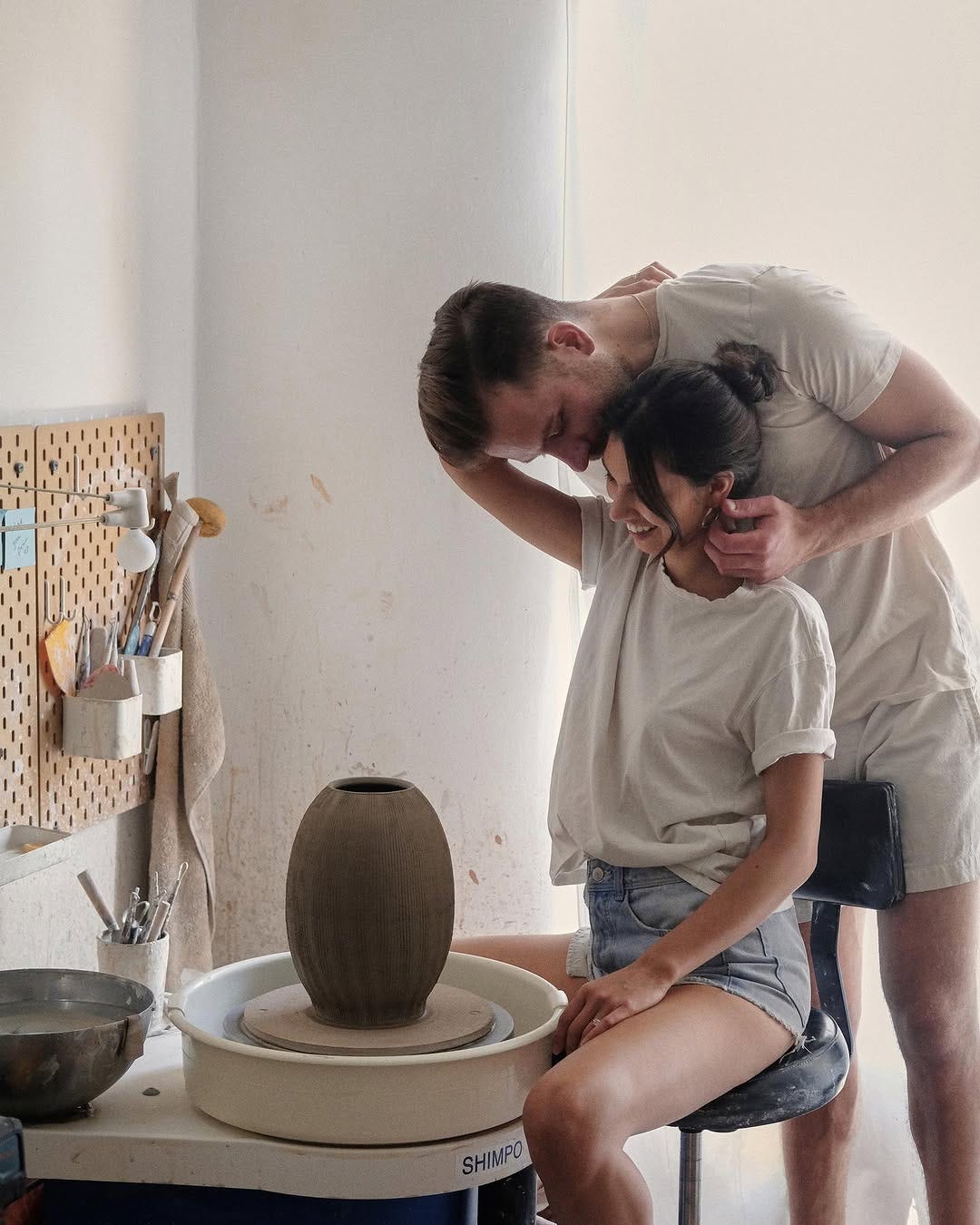
Through that process they gradually defined their roles more clearly. Micah focused on production and product development, while Alex stepped fully into operations, branding, marketing, and sales. The structure gave the company stability and allowed each of them to lean into their natural strengths.
“You have to protect the relationship first,” Alex says. “Otherwise the business can swallow everything.”
As the company stabilized, Alex found herself confronting another realization. The business, no matter how fulfilling, could never be the only outlet for her creativity. Ceramicah paid the bills and allowed her to build something meaningful alongside the person she loved, but she still felt drawn toward other forms of expression, including music and writing.
For a long time she resisted that instinct, unsure whether wanting more creative outlets meant she was somehow ungrateful for the success of the company itself. Eventually she stopped fighting it. “I would come back from a music session feeling like I was floating,” she says. “And I realized I needed that in my life.”
What Alex began to recognize is something many women quietly carry. They grow up hearing they can be many things at once, yet still feel an unspoken pressure to place everyone else’s needs ahead of their own. Careers grow, businesses demand attention, relationships deepen, and somewhere along the way the creative instincts that once felt essential begin to drift to the edges.
Returning to music reminded her that creativity was never optional. It was a form of clarity, a space that allowed her to reconnect with herself outside the roles she played for other people. The time spent there was not a distraction from the work of building a company. In many ways, it made the work possible.
For Alex, the answer has not been choosing one identity over another, but learning how to let them coexist.
⚀
Six years after its beginnings in their apartment, Ceramicah remains intentionally small. The team consists of four people, and each piece is still produced by hand in Los Angeles. Their original Tera Lamp remains the heart of the brand, though Alex and Micah are currently preparing to unveil a new product line this spring.
“It feels like the sophomore album,” she says, laughing.
The studio will continue to evolve over time, expanding into new objects and collaborations. But growth, at least for them, has never been the goal on its own. What matters more is preserving the conditions that made the company possible in the first place: curiosity, creativity, and the freedom to keep experimenting.
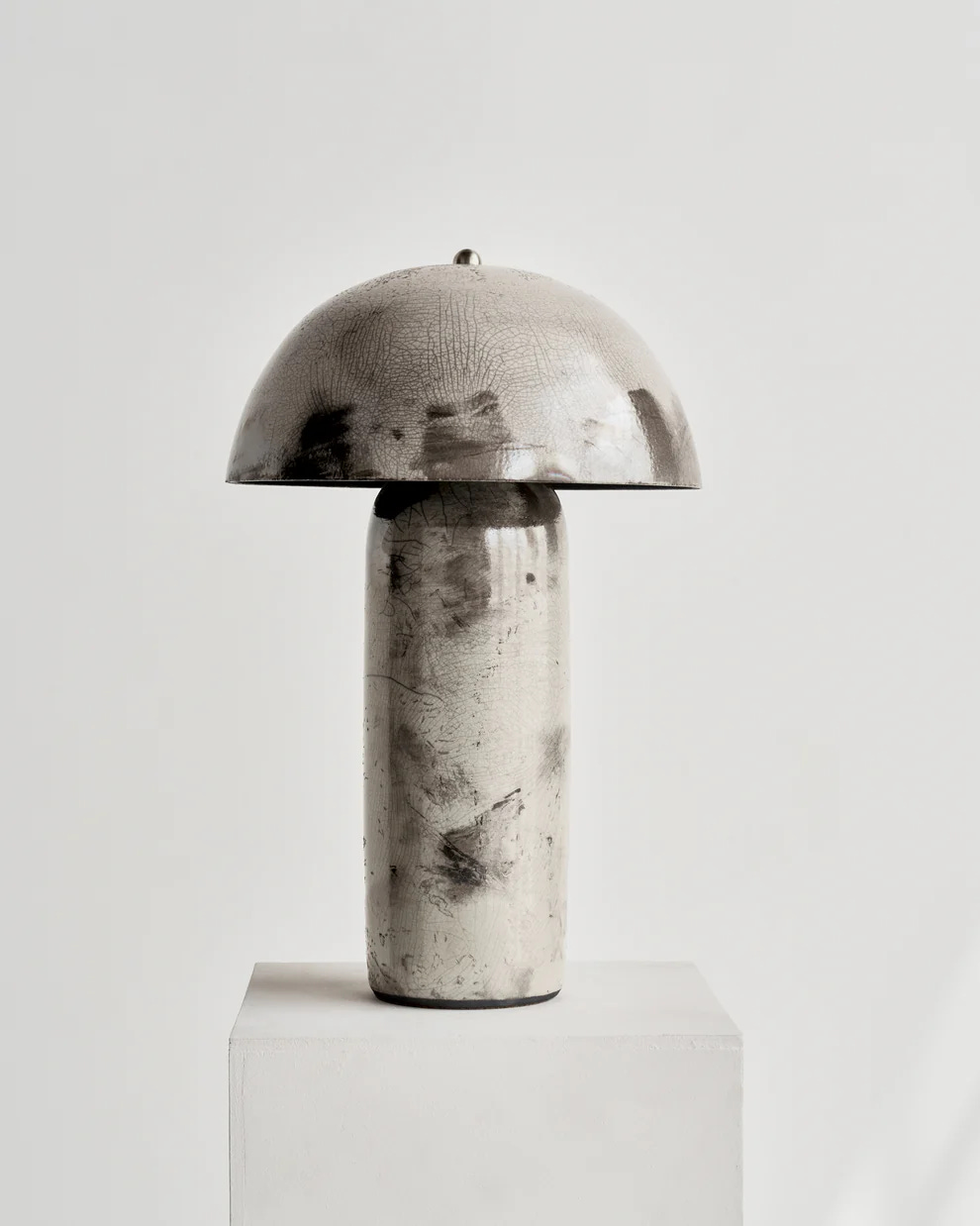
In a culture obsessed with speed and scale, Ceramicah moves differently. The work unfolds slowly, shaped by hand and expanded only as much as the life around it allows. When Alex reflects on the path that brought them here, the lesson she returns to most often is trust.
“When you trust yourself,” she says, “you can also trust your timing.”
Perhaps that is the true model her story offers. Success does not have to collapse a woman into a single identity. Sometimes it becomes one part of a much larger life, built carefully alongside the other selves she refuses to leave behind.
Thank you for being here.
Kelly
“Sometimes it becomes one part of a much larger life, built carefully alongside the other selves she refuses to leave behind.” Full body chills 🙏🏽 truly such an inspiring profile ♥️
Thank you for the most beautiful feature <3