
The Woman Behind The Rings. The Custodian of Heirlooms.
How Cleopatra's Bling founder Olivia Cummings turned a curiosity for ancient craft into thirteen years of jewelry that people never take off.

Before I had ever spoken to Olivia Cummings, I sensed a warmth about her. Heart-led feels like an overused and under appreciated term. But for Olivia, it rings deeply true.
Her brand, Cleopatra’s Bling, provides detailed historical references to each piece it carries, never missing the opportunity to give credit where credit is due. Her socials tell stories of family and found friends she has designed pieces for over the years. The visual world of the brand, not to mention the designs themselves, exude a warmth that envelopes you. Something bigger than the sum of its parts that could only come into existence through someone who genuinely loves what they do.
When I did get the chance to speak with Olivia, she did not disappoint.
⚀
Olivia grew up in Melbourne, in a household where creativity was so woven into daily life that she didn’t realize until much later it wasn’t everyone’s baseline. Her father was a classical musician and teacher. Her mother studied fine arts. Her brother is now a classical pianist. There weren’t many screens. There was a lot of time outside, and drawing inside, and inventing things. She and her brother were, by her own cheerful admission, little weirdos who dressed up as spies and roamed the garden led only by only vast imaginations.
That same creative household supported her curious mind, and that same curiosity supported her exploration of the world. At sixteen, she spent a year in an exchange program in Berlin. She finished high school in Melbourne, learning Arabic, then French. Six years spent in Paris. A master’s in brand management. Then a marketing job where her creativity was being used for other people’s businesses. Feeling the persistent awareness that she had a lot to dream up, she acknowledged this was not the forum.
Then she went to Istanbul for two weeks on her own and was completely floored.
“It’s just such a melting pot of aesthetic,” she says. “It was the seat of so many empires, all of which had their own really strong sense of aesthetic, and all of that together was an overwhelming visual experience.”
At twenty-three, she packed up her life in Paris and moved there. Her parents, at this point well practiced in letting Olivia follow her instincts wherever they led, eventually came to visit and fell in love with the city themselves.
⚀
Istanbul gave her proximity to craft. She spent years in the Grand Bazaar, learning from generational jewelers who had been doing this work for their whole lives, and their parents’ lives before. She learned wax moulding, lost wax casting, hot enamel work, hand engraving. She was earnest, curious, and continued to be welcomed through doors that tend to stay closed to people who treat these places as photo ops.
“I just don’t have this concept of fear,” she says. “I wasn’t aware of anything that could be an obstacle for me. Everything I can overcome and everything I can turn into a positive.”
From there, the brand that began as an Etsy shop found its footing across the world. She sold pieces directly to people who found her through an early blog. Press began to trickle in from Australia. She traveled to Bali to develop production, establishing the same relationship the brand holds today with an all-female R&D studio there. She developed fine production connections in Florence, where the stone setters are, by her assessment, unparalleled. Istanbul remained the creative heartbeat, where the hot enamel work happens and where stone engraving in the ancient style is still practiced by the people she met in her early twenties.
Slowly and organically, it did all turn positive, and Cleopatra’s Bling came to life. Cleopatra as a symbol of the East. Bling as a symbol of the West. Two halves of the aesthetic that Istanbul embodies.
⚀
There is a version of this story that reads as a tidy arc: adventurous young woman leaves Australia, discovers Istanbul, builds a beautiful brand, lives happily ever after. But that version is incomplete.
The fuller version includes a move to Naples and a flight back to Australia when her father was diagnosed with leukemia. Years of lockdowns, and a life-altering loss. It includes becoming a mother, a daughter born into a family that had just lost its patriarch, a new life arriving in the wake of another ending.
Olivia shares this story because it is inseparable from who she is as a designer and businessperson. The loss condensed her available hours and clarified what she wanted to spend them on. It deepened her understanding of what jewelry actually means. Not as an accessory, but as what she calls “ritualistic adornment”. Something worn to mark the moments that matter, to carry the people we love on our bodies when they can no longer be beside us.
True to that statement, Olivia’s own stack tells her life in the way that only jewelry can.
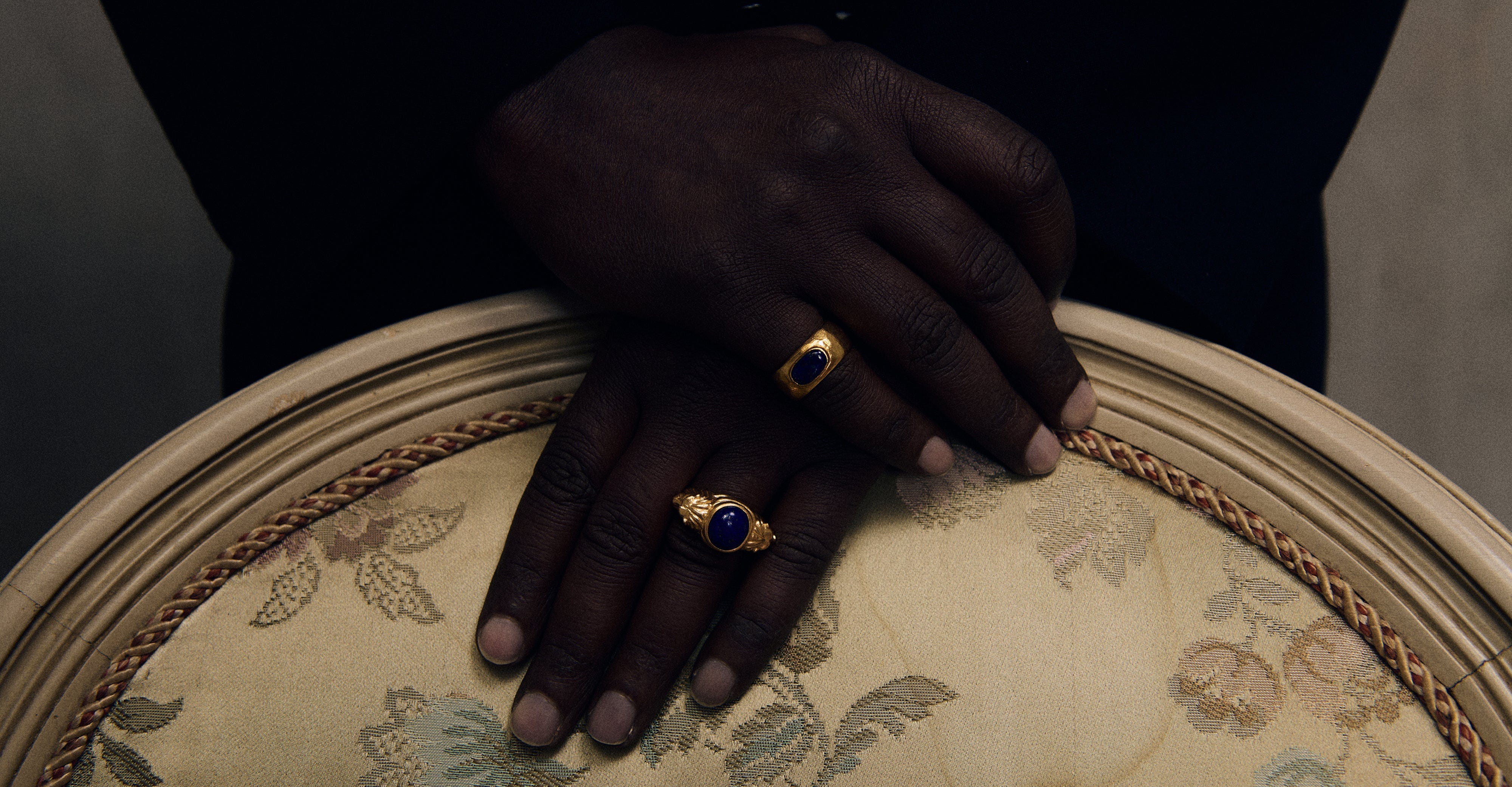
A jade bangle hand carved in India and a serpent head bangle in solid gold. Rings that mark different chapters. Her wedding stack she chose with her husband. He has a cognac diamond of his own. “He’s my bride,” she says, laughing. “We chose them together.”
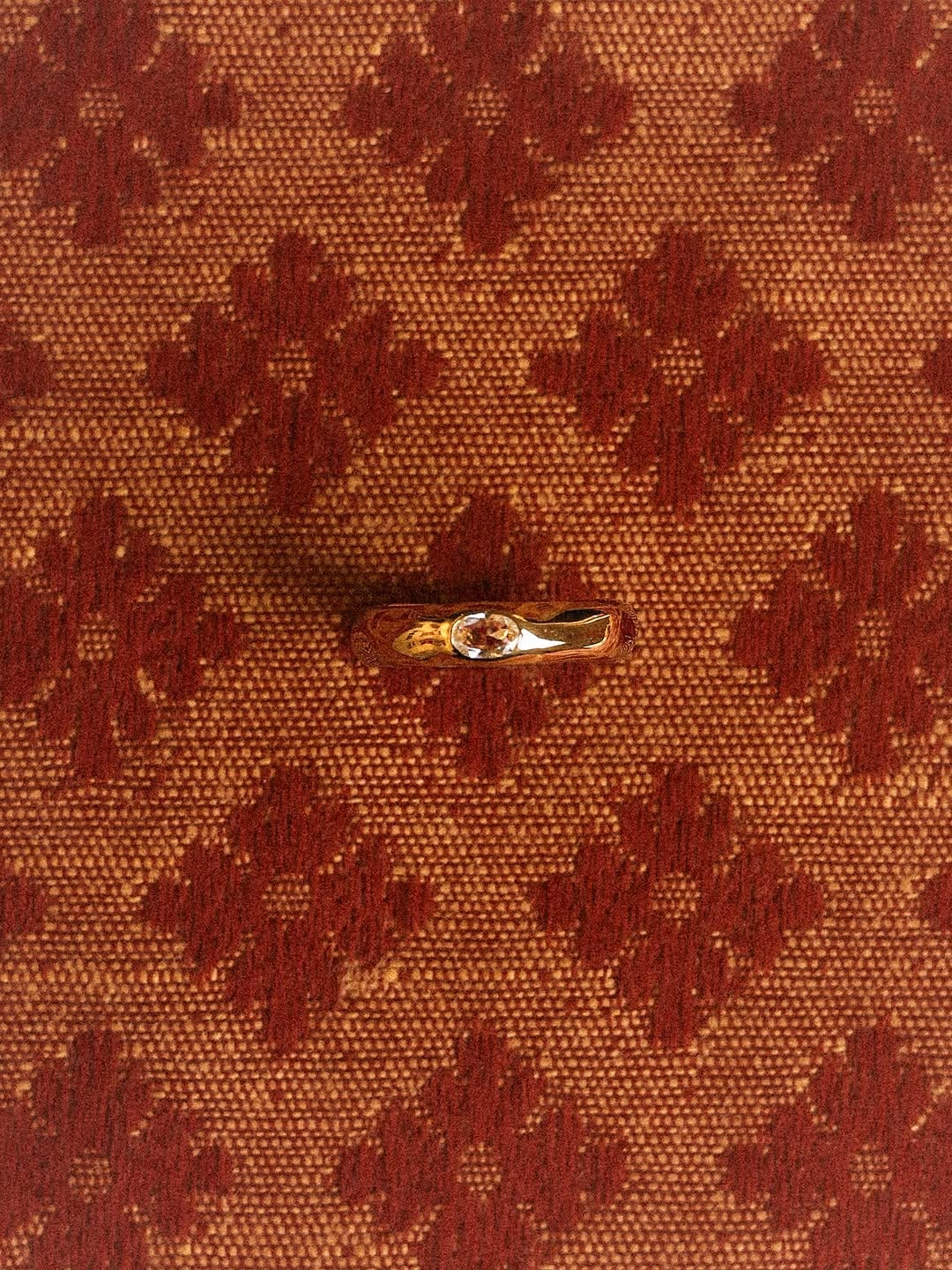
On another finger sits a diamond she bought the year after her father’s passing. Her father loved diamonds. The higher the carat the better, he’d say. Before he passed, the two of them went together to a diamond dealer, chose a stone, and Olivia designed a ring that he gave to her mother. After he was gone, she had her own made. She calls it the Egeria Ring.
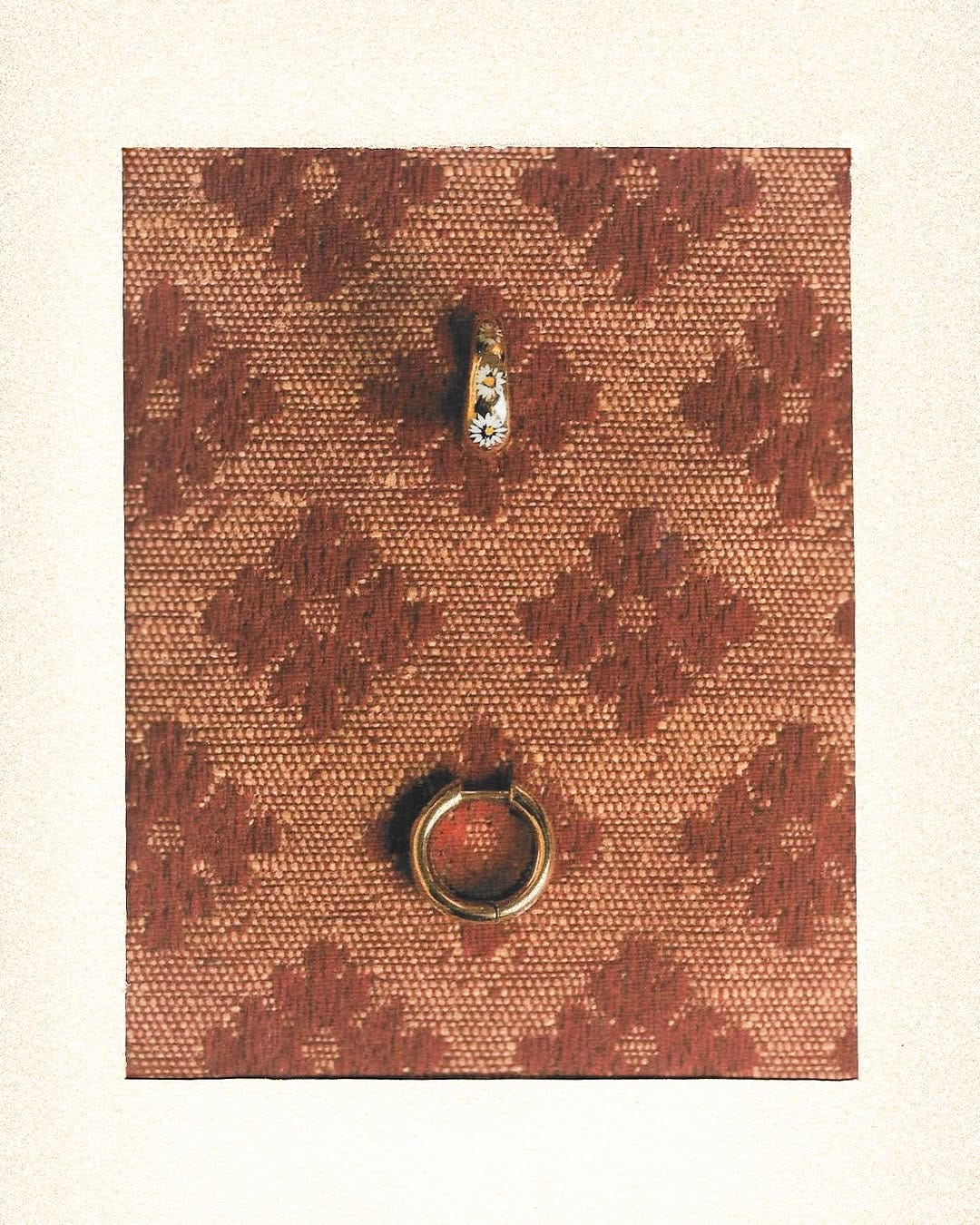
Stacked alongside it sits a solid gold enamel band, the Angarika Ring, hand engraved with colored pigment pressed into the channels and fired in an enamel oven. She wears two of these enamel rings, both designed in Jaipur with local artisans while there during her father’s last trip overseas. The second, the Kamala Ring, holds a hard-poured lotus flower and 31 diamonds. The lotus, she acknowledges, grows out of the mud.
Every ring holds an emotional past. Every stone is a choice made with intention. This is how Olivia speaks about jewelry and this is how she actually wears it.
⚀
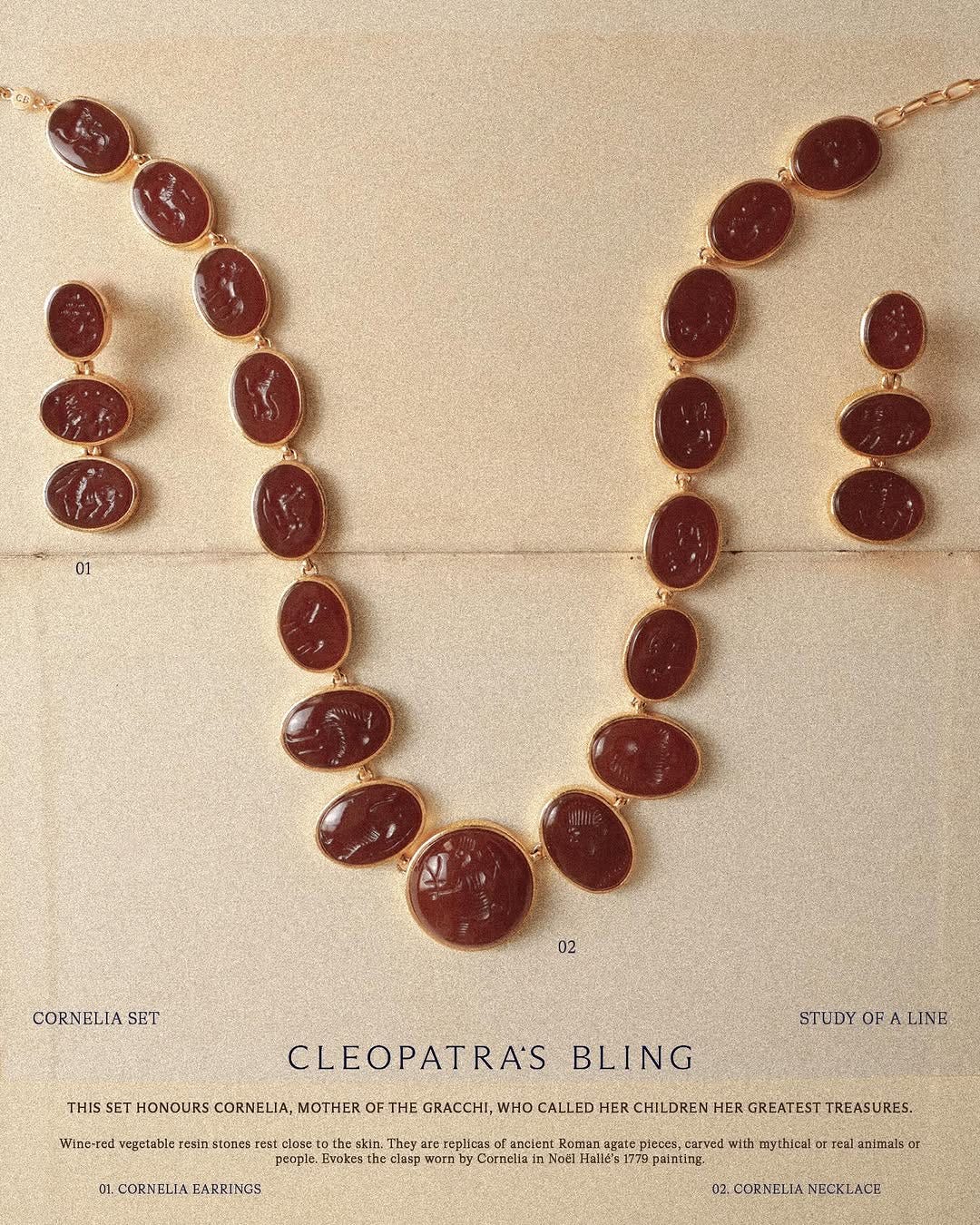
The Cleopatra’s Bling collections, three demi-fine and one fine per year, are rooted in historical research that Olivia credits openly and specifically. She is categorical about this, adamant about not claiming to have invented anything. She is referencing, honoring, and trying to keep alive.
Olivia meets with customers often to design custom pieces. They come on calls and tell her about their weddings, divorces, children being born, their losses. Just like she has with her own, she designs those stories into jewelry.
For a brand this rooted in people, sustainability was never going to be just about materials. Rather, Olivia views it across three pillars.
First, material. Recycled silver, a gold recycling service that allows clients to bring retired pieces and remake them into something new. A stone supply chain so short she was texting her Australian sapphire dealer the morning of our call. She does not use lab-grown diamonds, as she finds the energy requirements and certification transparency genuinely troubling, preferring natural stones she can fully trace. Next, human. Partner studios vetted against Responsible Jewellery Council standards. And lastly, cultural. She works directly with the craftspeople who hold the techniques, rather than learning something and taking it elsewhere to be reproduced more cheaply.
“That would be the soul of the brand gone.”
⚀
Today, Olivia lives in Madrid, with her husband and daughter, Alba. Her daughter was due on the thirtieth of September. She arrived two and a half hours before midnight on the eighteenth of October. Olivia’s father’s birthday is the nineteenth.
Olivia tells the story with wonder and steadiness. She has thought about what it means, and has made peace with the timing without making it smaller than it is.
The nurses from her father’s hospital stay are still in Olivia’s life. She remembers going into her father’s ward and seeing the nurses wearing Cleopatra’s Bling. Her father was her biggest proponent. One nurse, a blood scientist who had done many of her father’s tests, followed Olivia through her entire pregnancy as part of her midwifery studies, and is now one of her closest friends. Another nurse’s future husband reached out to her the week of our conversation asking about a ring. She calls them her dad’s angels.
“Things like this align all the time,” she says. “I will think of something, and then it kind of just starts to manifest. I know that sounds super weird.”
It doesn’t sound weird. It sounds like someone paying close enough attention to notice.
⚀
When I ask what she would tell someone at the beginning of their own creative journey, she knows her response.
“Try not to judge yourself,” she says. “The internal judgment is a lot more severe than what you think other people are thinking when they look at your creations.”
She tells a story about flying from Naples to Sicily and sitting next to an American couple. She told them what she did, because they asked. They still follow her on Instagram. They still leave nice comments. They’ve bought jewelry. Not because she was trying to sell them something but because she didn’t minimize what she was doing.
“Not minimizing yourself means you can make some really nice connections,” she says. “We always have that fork in the road where we can decide to be honest or pretend it’s just this little thing I do on the side. It was never a little thing for me. It was always a big thing.”
She adds something more as we wrap up.
“Everybody’s creative,” she says. “The self-imposed pigeonholing we do as humans is very minimizing. I’ve just accessed mine. That’s the only difference. The accessing and allowing myself to go there.”
Her daughter, now eighteen months, is already showing her in the way that only very young children can, what creativity looks like in its purest form. Explorative, unselfconscious, not yet aware it could be anything other than exactly what it is.
Olivia watches her and remembers.
Speak soon,
Kelly