
Grace Wales Bonner and the Act of the Interdisciplinarian
On heritage, quiet power, and intentional creation.
I’ve always been drawn to artists who blur the line between research and emotion — who make you feel something, then make you wonder why.
With the risk of sounding cliché (oh no, what an awful way to start an article), the importance of art is much less about the visual experience and more about what the visual experience represents — the story it tells, the influence it’s evolved from, the soul poured into it by its creator.
Grace Wales Bonner is, first and foremost, an artist. What’s most fascinating about her art is that you never have to search far for its soul. Deeply connected with her personal identity, her work is an exploration of heritage, spirituality, and selfhood — a reflection of culture that educates, informs, and transcends boundaries.
There are certain stories where context feels essential — where to understand the art, you have to first understand the soil it grew from.
The Roots of Wales Bonner
Born in South London in 1990 to a white English mother and a Jamaican father, Wales Bonner grew up moving between two worlds — Dulwich and Stockwell, Europe and the Caribbean. That duality shaped everything that would follow. “At school, I had some pressure to prove my blackness,” she’s said. “I have to be between places, because that’s a creative space for me.”
Fashion became the language through which she learned to tell her story. After graduating from Central Saint Martins in 2014, she launched her namesake label with a graduate collection titled Afrique — a study in identity that merged Savile Row tailoring with Afro-Atlantic references. Within a year, she was showing at London Fashion Week and by twenty-five, she had already won the LVMH Prize for Young Designers.
Yet her ambition carried much more purpose than fame. Her early collections explored Black masculinity with sensitivity and nuance, portraying men who were intellectual, elegant, and emotionally complex. Her designs ask quiet questions about how identity is seen, shaped, and expressed.
The Idea That Clothing Can Carry History
To understand the magic of Wales Bonner is to understand her commitment to intention. Every collection is a conversation between worlds: European structure and African rhythm, British heritage and Caribbean spirituality, literature and sound.
Reading about her early collections, I couldn’t help but think of how rare it is to see intellect translated so beautifully into clothing. Ebonics, her 2015 collection, fused razor-sharp suits with echoes of diasporic memory. Lovers Rock celebrated London’s 1970s reggae scene; Volta Jazz paid homage to West African musicians and photographers. And in Jewel, her 2026 collection, she translated a decade of cultural study into a refined, personal archive — pairing Savile Row tailoring and jeweled details with the ease of everyday wear. Each feels like a love letter — to the past, to her lineage, to the idea that clothing can carry history.
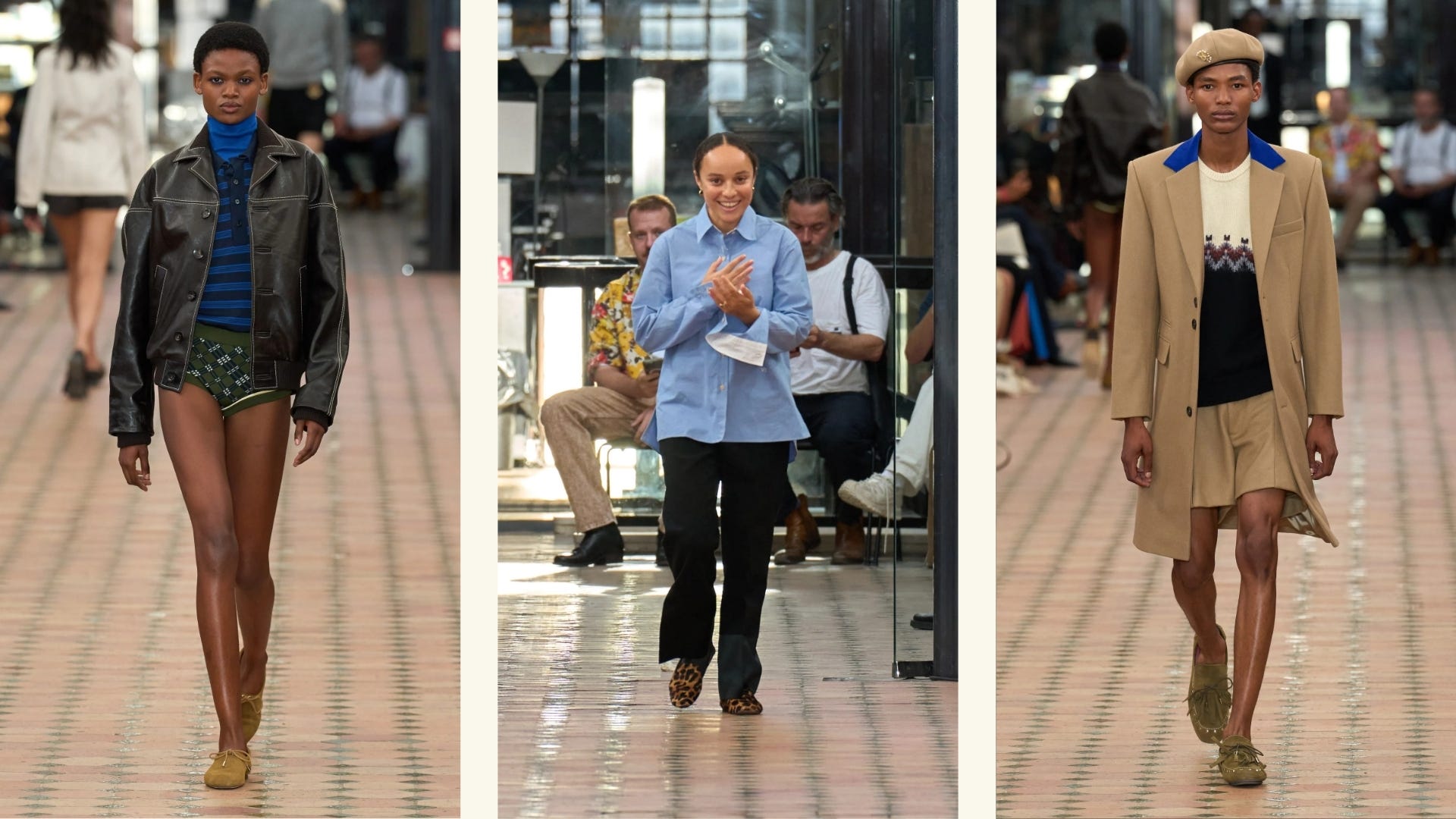
Beyond the runway, her creative practice spills into art, music, and academia. She curated A Time for New Dreams at London’s Serpentine Gallery, an immersive exploration of mysticism and Black cultural practice. She collaborated with Dior and Adidas, and even designed the Jamaican national football team’s kits — transforming sportswear into a vessel of national pride. At MoMA, she curated Spirit Movers, exploring sound and movement in the African diaspora. Each project expands the Wales Bonner universe while preserving its quiet soul.
There’s an elegance to how she builds culture through collaboration: musicians like Sampha and Solange, writers like Ishmael Reed, institutions like Howard University. Through these connections, she turns her brand into something greater — a living dialogue between Blackness and Britishness, modernity and memory.
Her achievements mirror that depth. In 2019 she won the British Fashion Council/Vogue Designer Fund; in 2021 the CFDA named her International Men’s Designer of the Year; and in 2022 she was appointed MBE for services to fashion. Each honor marks a milestone, but collectively they signify something deeper: recognition that thoughtfulness itself can be revolutionary.
Influence on Identity and Culture
Wales Bonner’s work is inseparable from her identity — and in turn, it has influenced how culture defines identity. As a biracial Black woman designing for a global audience, she occupies an in-between space that feels both grounded and expansive. “Being ‘this’ doesn’t mean you have to be ‘that,’” she’s reflected, embracing multiplicity as creative power.
“I found it quite interesting to realize how immediately fashion can be a mode of communication and how you can communicate very deep, nuanced ideas about identity through imagery.” - Grace Wales Bonner, in conversation with Vogue, 2019
That philosophy manifests in every garment. Her collections blend British tailoring with African and Caribbean motifs, creating a meeting point between histories once kept apart. Fashion critics often note how a single Wales Bonner look can carry echoes of Western precision and African storytelling — silk and symbolism in the same breath.
The Legacy in Motion
Ten years into her career, Grace Wales Bonner stands as both designer and cultural historian — a thinker using clothing as her medium. She’s curated museum shows, collaborated with heritage brands, and guided her independent label with the patience of a scholar. “I see myself primarily as a researcher,” she’s said, framing design as inquiry as much as aesthetics.
Now in her mid-thirties, she’s reached a point where influence and intention coexist. She’s dressed cultural icons like Meghan Markle, Lewis Hamilton, and Tyler Mitchell, and sat on the Met Gala’s host committee — yet she remains deeply introspective. Her brand continues to evolve thoughtfully, expanding into jewelry and experiential projects that honor her roots while inviting others in.
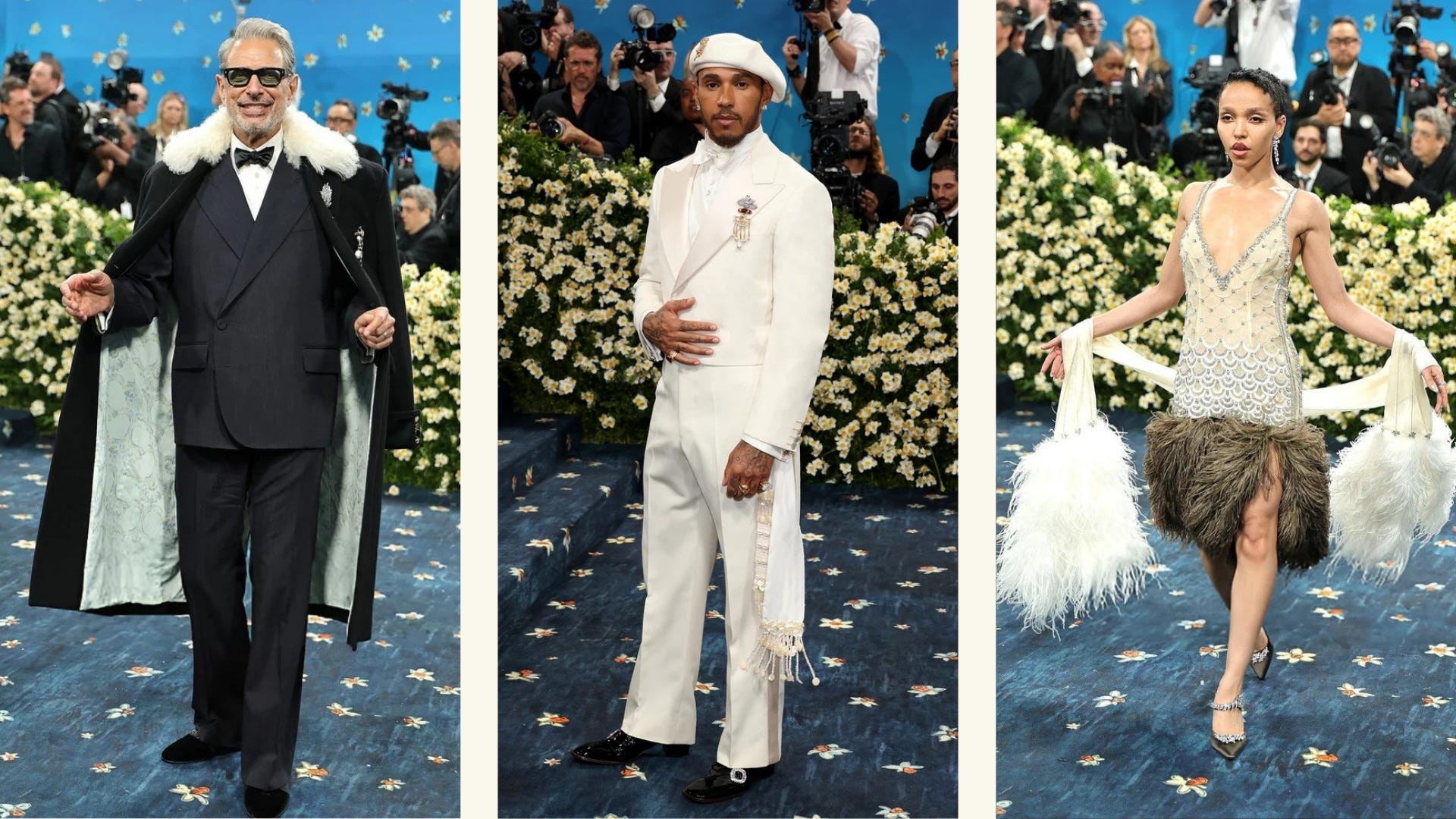
What’s next for her feels less like a corporate ascent and more like a cultural unfolding. Some imagine her leading a major luxury house, but her trajectory suggests something different — a deliberate widening of scope without losing soul. Her studio has become a space where research, spirituality, and craftsmanship meet; where creativity serves community.
Ultimately, Grace Wales Bonner is designing more than clothes — she’s designing meaning, showing how fashion can be both intellectual and intimate, political and poetic. In a world that prizes speed and spectacle, her power lies in her stillness. She creates slowly, intentionally, with reverence for the stories that made her. Her work reminds us that cool isn’t noise or novelty — it’s about depth, intention, and presence. It’s about knowing who you are and daring to move at your own rhythm.
For anyone navigating dualities — between cultures, identities, or expectations — her journey offers a kind of peace. She proves that living between places can be not a burden, but a blessing: a vantage point from which to see the whole picture.
In her hands, fashion becomes language, one spoken softly, but impossible to ignore.
Speak soon,
Kelly