
How Empathy Can Change the World from the Perspective of Artist, Barbara Kruger
Shaping perspective, challenging norms, and fueling the creation of something meaningful.
In 1994, Barbara Kruger installed the words “L’empathie peut changer le monde” on a train station platform in Strasbourg, France. The phrase, translating to “empathy can change the world,” feels like an apt depiction of Kruger’s mission as an artist.
She grabs attention quickly, makes her point, and leaves the viewer with an internal dialogue, questioning how our society operates and how we choose to exist and behave among one another.
I recently stumbled upon one of her works at an exhibit in Los Angeles. I have to admit, the reason it first caught my eye was a sense of familiarity, but not with Kruger. I immediately thought of Shepard Fairey. And to make matters worse, my first thought was, “Was this piece influenced by his work?”
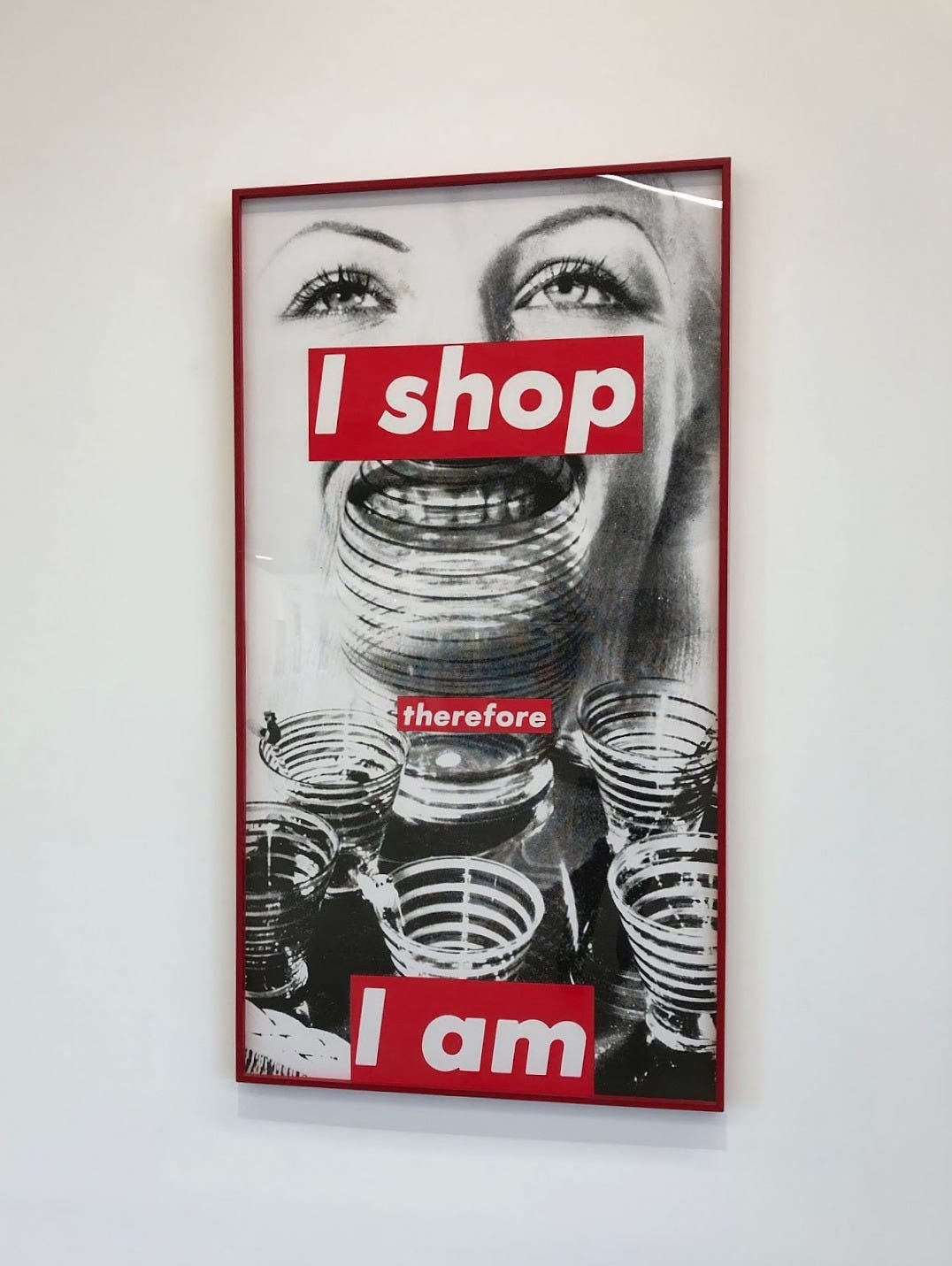
Why do I perceive that thought process as negative? Not only was Barbara Kruger not influenced by Shepard Fairey, well-known in pop culture for both his art and his brand, Obey, but Fairey was directly influenced by Kruger, who came before him.
Did I jump to the conclusion that Fairey came first because he’s a man? Did I simply assume because he has more prominence in pop culture? Either way, I felt frustrated with my own internal processing, which led me not only to research Kruger but to fall in love with her attitude, anger, talent, and perspective.
The Value of Attention
Born in Newark, New Jersey, in 1945, Kruger was raised not long after the women’s suffrage movement. While attending Parsons School of Design, she studied under photographer Diane Arbus, who she recalls being “the first female role model I had that didn’t wash the kitchen floor six times a day.”
She left school and landed a job at Condé Nast as a magazine designer, quickly recognizing the power of combining image and text to capture attention. This realization became the first brick in the foundation of her celebrated career as an artist.
(I hold onto these moments in each founder’s and creative’s story as a reminder that every piece, no matter how small, becomes a drop in a much larger stream of momentum.)
By the mid-1970s, she made the decision to pursue her own art, growing restless in the act of “supplying someone else’s image of perfection.” She began writing poetry and creating art that would soon challenge how we see the world.
Gender, Consumerism, and Reproductive Rights
Kruger began teaching at the University of California, Berkeley, immersing herself in theoretical texts and studying concepts of design theory, semiotics, and the sign systems of popular culture. Coupled with her feminist consciousness and interest in critical theory, these experiences came together to shape her iconic visual approach.
Using found photographs, often sourced from mass media and advertising, she created confrontational collages that questioned the world we exist in. Her work borrowed the techniques of sales-driven industries and turned them into a form of visual protest.
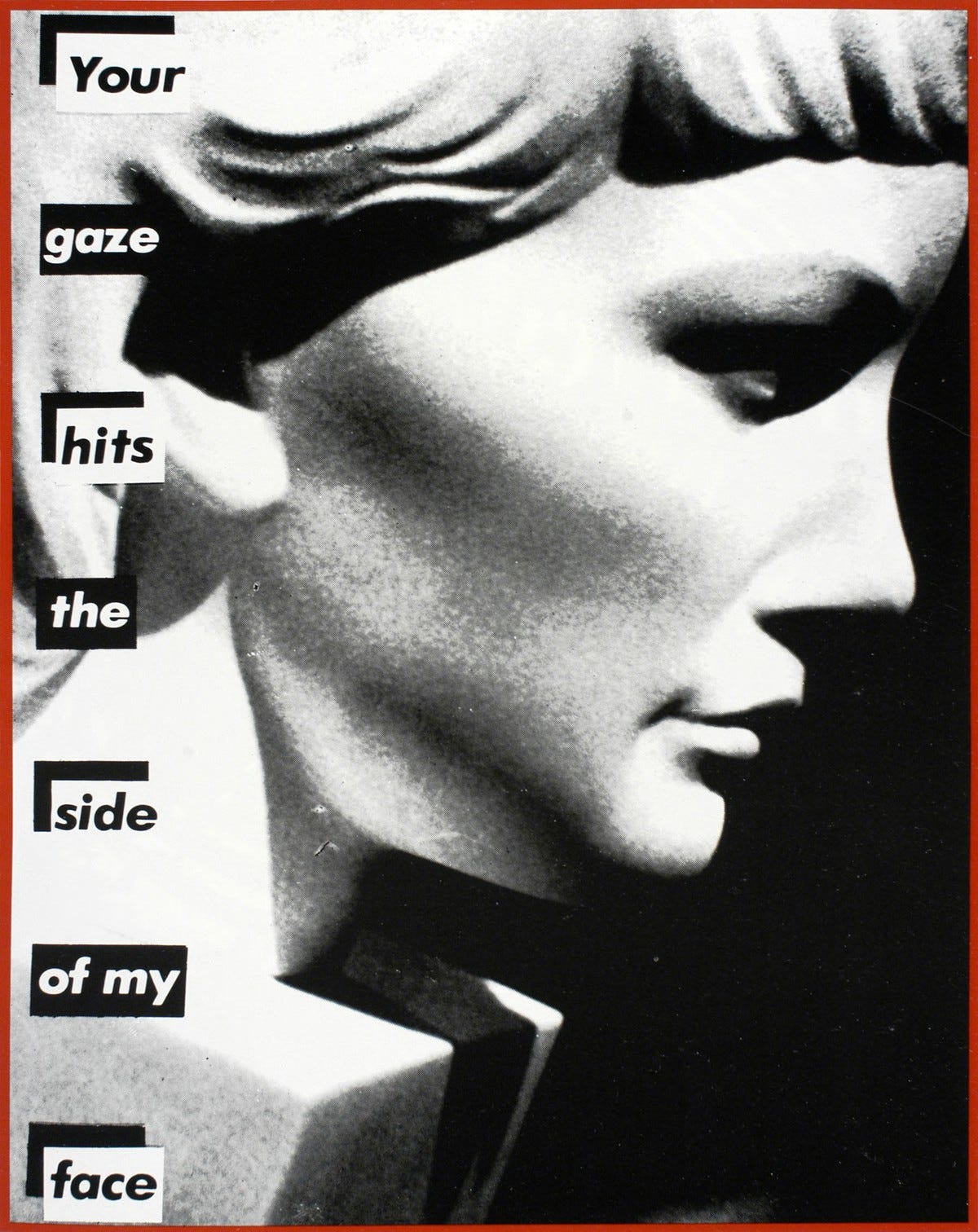
Alongside contemporaries like Cindy Sherman and Jenny Holzer, Kruger dissected how images and words shape our identities and beliefs. She addressed issues of sexism and representation with works like Untitled (Your Gaze Hits the Side of My Face) (1981), a carved marble profile of a woman’s face accompanied by text calling out the objectifying male gaze. She confronts viewers with the cultural biases embedded in everyday imagery.
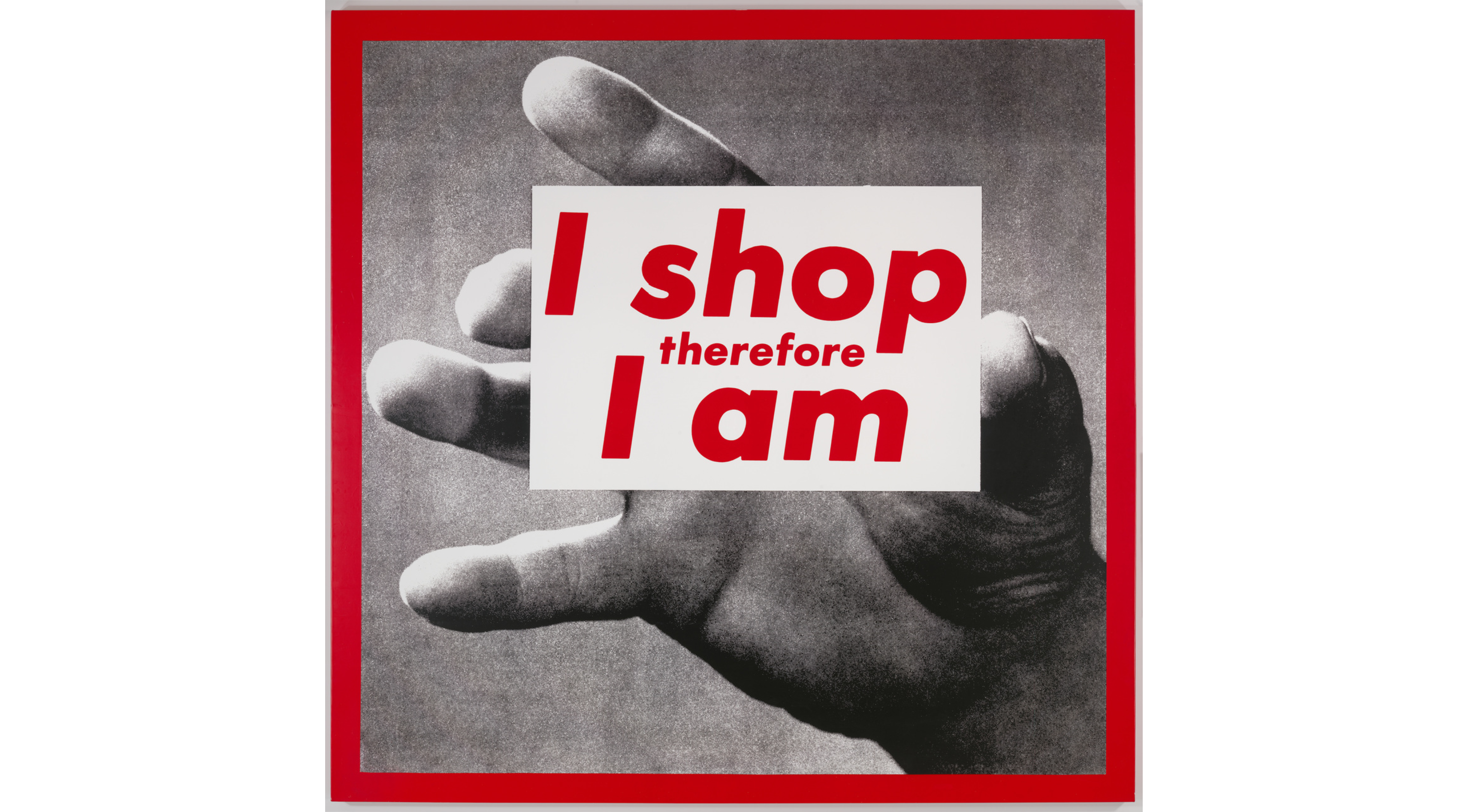
In 1987, at the height of Reagan-era consumerism, she created a piece that declares, “I shop therefore I am.” Printed on an image of an outstretched hand holding a credit-card-like offering, the phrase twists Descartes’ famous philosophical statement. The work became one of her most recognized, exposing how modern identity is often shaped by consumption.
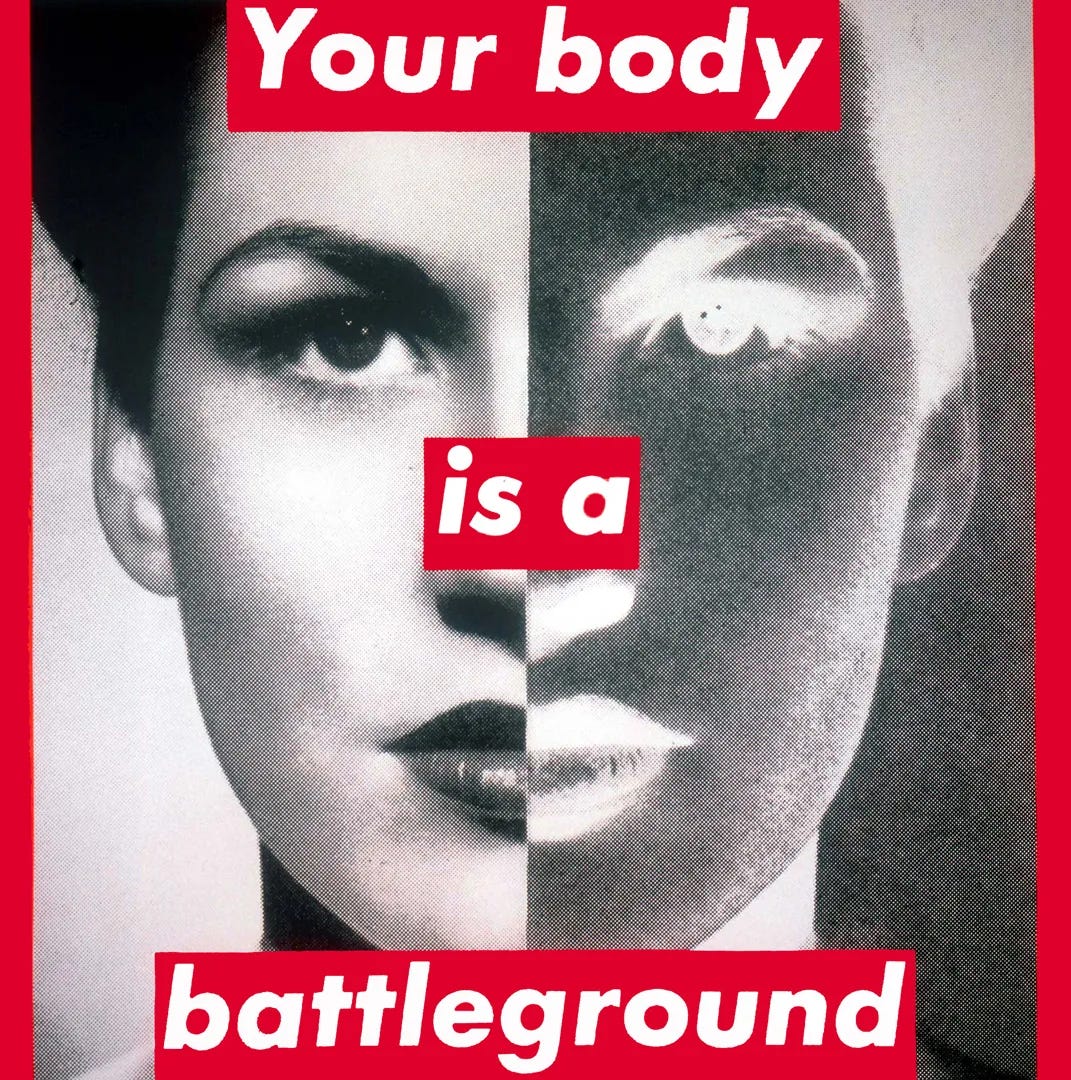
In 1989, Kruger designed her poster “Your body is a battleground” for the Women’s March on Washington for reproductive rights. Featuring a split image of a woman’s face — one half positive, one half negative — overlaid with that bold slogan, the message remains a powerful statement on women’s autonomy and the constant fight over women’s bodies in politics. She later installed the piece beside a pro-life billboard, creating a striking juxtaposition of opposing messages.
The Feminist Perspective
Kruger also raises an important dialogue around what it means to be categorized as a “female artist.” She does not make art that speaks only to one group. While she proudly identifies as a feminist, she resists labels like “women’s art” or “political art,” believing they “perpetuate a certain kind of marginality.”
I recently saw a post from a white woman expressing her appreciation for Black artistry while asking if it was “okay” for her to display pieces from Black artists in her home. While the question came from a place of kindness and concern, it also reveals the separatism baked into our society.
From the beginning, Kruger sought to engage everyone with her work, aiming directly at the power dynamics and social issues that affect all of us. This philosophy helped her transcend the limits often imposed on female artists, and by the late 1980s, Barbara Kruger had become one of the most prominent conceptual artists of her time — regardless of gender.
Art Has Always Been Political
As a child, I interpreted art as a practice of aesthetics — what is visually interesting, what is pretty. Through the filter of a feminine child in the 90s, it actually makes sense.
As an adult, I continue to learn that art, while often pleasing to the eye, more importantly invites us to think deeper about our existence, our history, and our relationship to one another.
Barbara Kruger’s work is no different. She confronts us with uncomfortable questions. She dares to stand against what she doesn’t believe in, not because it was the common belief, but precisely because it wasn’t.
As C’est Cool grows, I remind myself that this is not a political publication. Your beliefs may differ from mine, but that does not exclude you from this community. Rather, it invites you to question, discuss, and challenge. (Whatever you believe in this moment, I’m glad you’re here and I hope you come with an open heart and mind.)
At the same time, I believe the most meaningful acts aren’t always meant to set you at ease. Sometimes they’re meant to unsettle. Discomfort isn’t bad if it leads to awareness.
In the words of Kerry James Marshall, “Art has always been political — whether it chooses to acknowledge it or not.”
Is this art? An individual question that deserves an individual reflection.
As you go about your day, your career, building your business, and supporting others, you’ll be bombarded with advertisements, social-media content, and political sloganeering. We exist in a sea of images and words meant to persuade us of something.
I hope you take Kruger’s art as a reminder to interrogate those messages and to find power in your own awareness.
I also hope you learn from my mistake and resist being too quick to assume where a style or idea came from. I’ll be thinking twice about who might be the unsung innovator behind the scenes.
Thank you for being here,
Kelly