
Phoebe Philo and the Language of Cool
A meditation on independence, integrity, and the art of dressing for yourself.
There’s an undeniable inaccessibility that comes with the fashion industry. I felt it fiercely during my time at Fashion Week — the exclusivity of coolness, the you’re in or you’re out. It’s in pursuit of breaking down that sentiment that C’est Cool exists. I deeply believe that “coolness” is not something judged via a quick glance. What makes someone cool is their depth, their uniqueness, their experiences, and their willingness to try.
Phoebe Philo lives on both sides of that spectrum. She is “cool” as defined by fashion’s elite — her pedigree, her taste, her high-street associations. But to me, she is cool because at her core she cares solely about women, art, creativity, and quality. Cool is quality. And quality is what Phoebe creates.
It took me years to realize I had been dressing “all wrong” — not to feel attractive, but to appear attractive. To see myself not through my own eyes, but through someone else’s. The male gaze. The social media gaze. The subtle (and not-so-subtle) judgments women face every time they walk into a room. That tension is why my time at Fashion Week was both intoxicating and alienating. Sitting in those venues, the spectacle was undeniable. But so was the vanity, the trying-too-hard, the endless comparisons. Fashion at times felt less about beauty and more about performance. Less about dressing to feel, and more about dressing to be perceived.
Which is why Phoebe Philo matters, and why she will always matter.
Roots and Rising
Phoebe Philo’s story begins in Paris, where she was born in 1973 to British parents. Her mother worked as an art dealer, her father a surveyor. When the family returned to London, she grew up immersed in creativity. As a teenager, her parents gifted her a sewing machine, and she began making her own clothes — an early act of independence that would become her signature.
After graduating from Central Saint Martins in 1996 with a collection already noted for its boldness, she joined Stella McCartney at Chloé. At first she was “just” an assistant, but in truth she was muse, confidante, and right hand. By 2001, she was appointed creative director, bringing to Chloé a distinctly modern, feminine spirit.
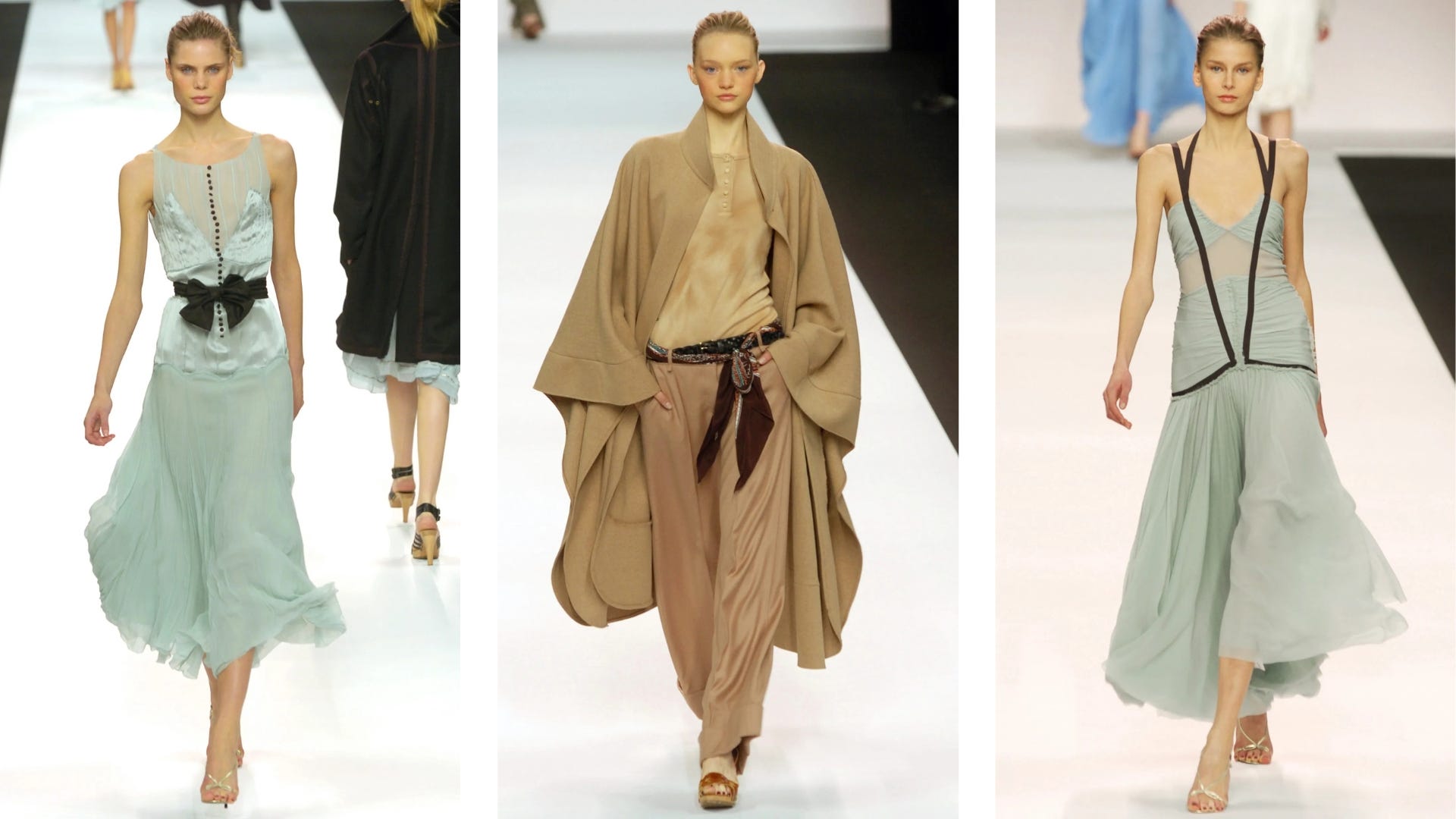
At Chloé, she remade the brand into something romantic but also grounded: breezy babydoll dresses, slouchy low-rise trousers, vintage-inflected prints that felt alive in the early 2000s. She also created what would become one of the decade’s great icons — the Paddington bag, a slouchy padlocked accessory that sent sales soaring and captured the cultural moment. She was named British Designer of the Year in 2004, cementing her as one of the brightest stars in the industry.
And yet, in the middle of this ascent, she stepped away. In 2006, she left Chloé to raise her children. It was a choice nearly unheard of at her level, but it was emblematic of who she was: first the woman, then the clothes.
Céline and the Woman First
Two years later, LVMH gave her the keys to Céline. She agreed, but only if she could remain based in London. From the start, her approach was clear. “I felt it was time for a back-to-reality approach to fashion,” she said. And reality, for her, meant women.
Her first collection was a jolt of restraint in an era of excess: precise trousers, minimal leather dresses, a calm palette, clothes made to move through the world. She made classics modern and functionality desirable. She also made a statement — rejecting the male gaze that defined so much of the early 2000s and dressing women for themselves.
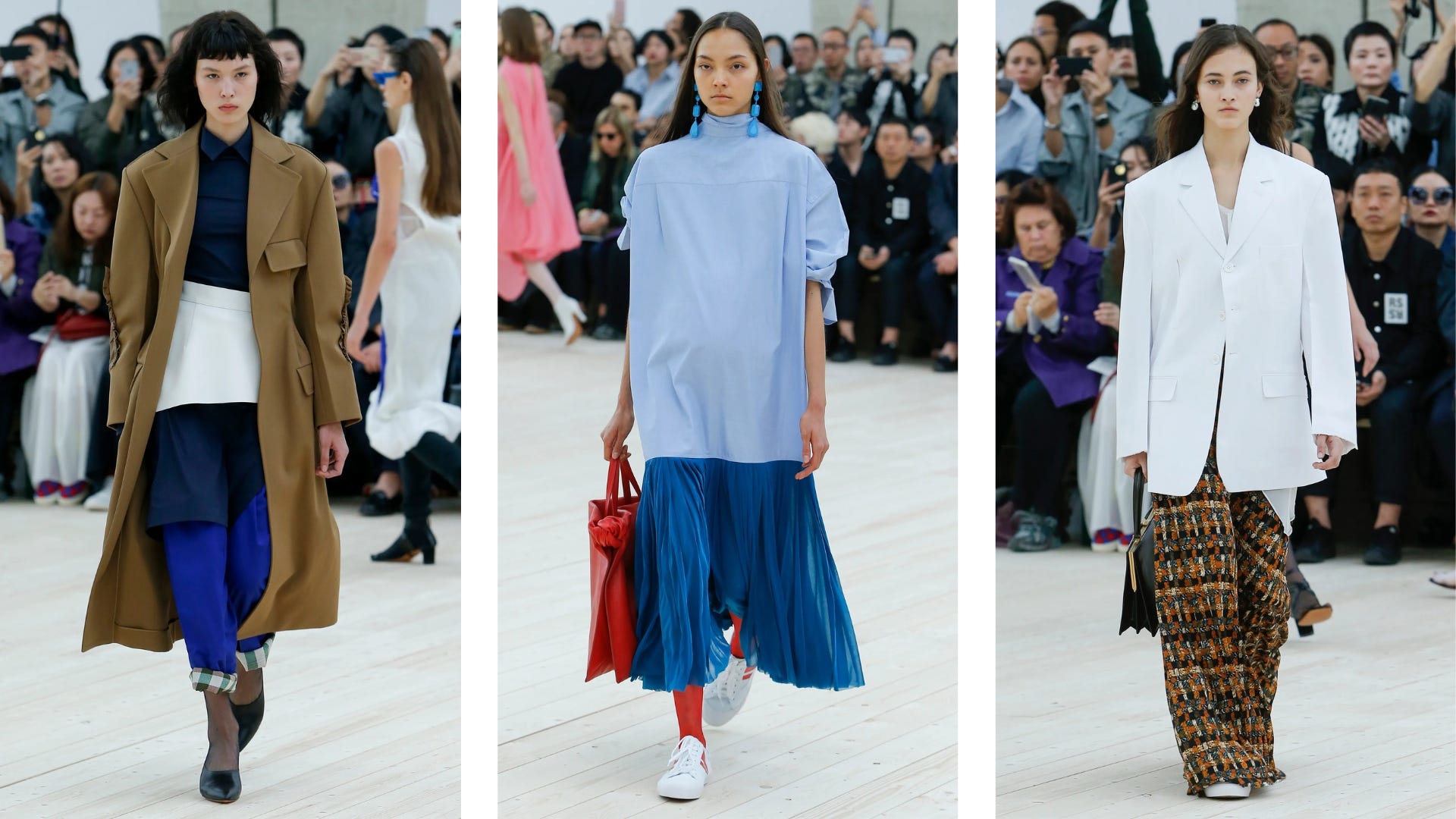
Philo’s Céline became a cultural force. She cast Joan Didion in a campaign at age 80, dismantling fashion’s obsession with youth. She sent out fur-lined sandals and oversized totes that became cult objects, but more importantly, she gave women a uniform that was intelligent, confident, and unfussy. She elevated quiet luxury long before it became a buzzword.
Critics wrote that Céline under Philo was the most influential brand of its time. Financially, the house thrived, with sales more than tripling under her direction. Creatively, she defined a generation of womenswear: the Philophiles — her near-cult following — included editors, celebrities, and women who felt that for the first time, clothes had been designed with their lives in mind.
Defiance and Pause
After nearly a decade at Céline, Philo stepped away again in 2017. The departure left a hole so wide that fans created the Instagram archive @oldceline to preserve her work. It was proof that her designs weren’t just fashion but language — a way women had learned to speak through what they wore.
Her absence was felt viscerally. Resale prices skyrocketed. Editors mourned. Her protégés — designers like Daniel Lee and Peter Do — carried her minimalist flame, but no one could replicate the clarity of her vision. She had left on her own terms, choosing family and life over the demands of an empire.
Independence and Return
In 2021, she announced her comeback: Phoebe Philo Studio, her first independent brand, with herself as majority owner. Independence wasn’t just structure; it was philosophy. She would release collections as “edits,” seasonless and direct to consumer, bypassing the circus of Fashion Week.
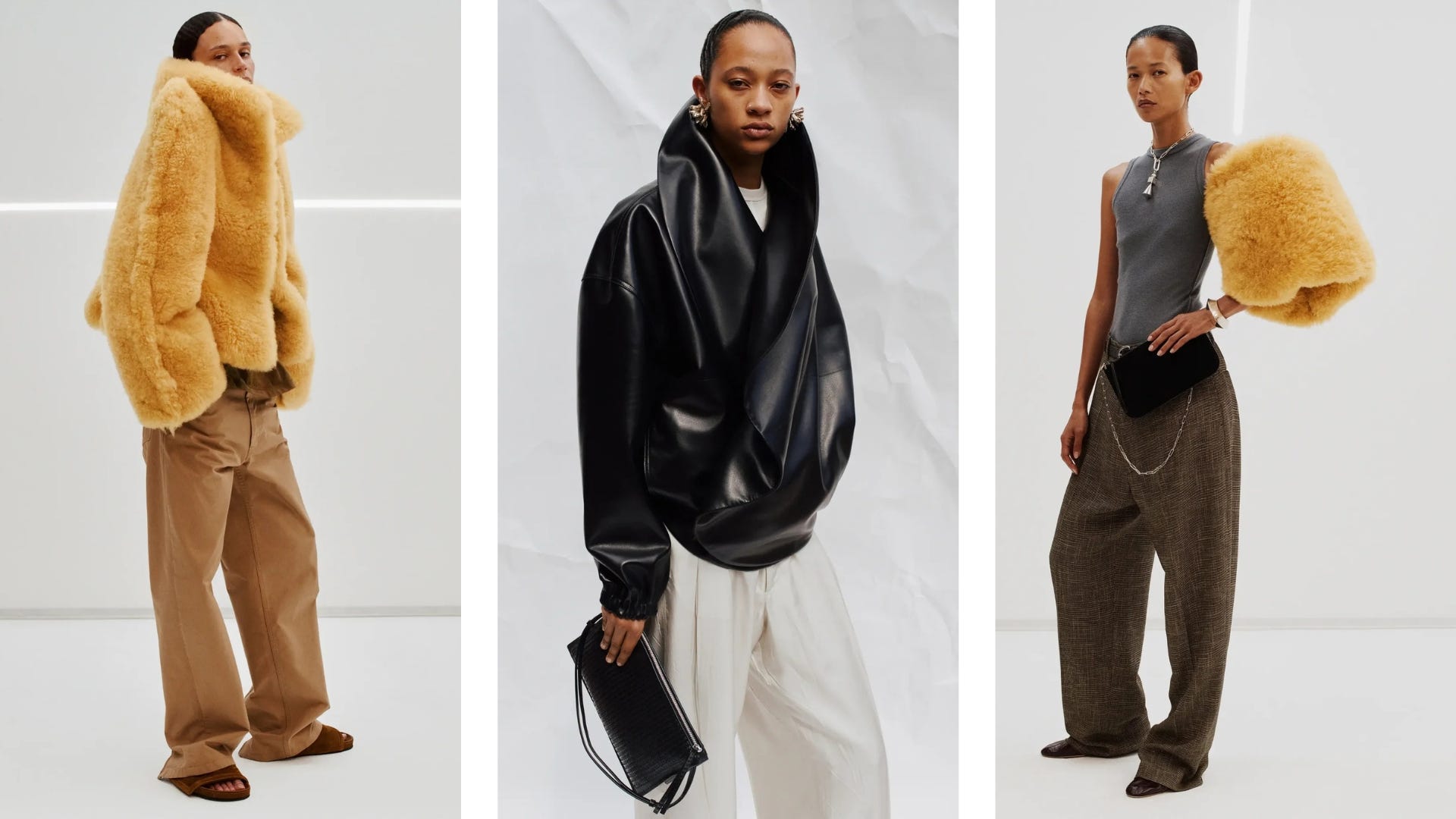
When her first collection dropped in October 2023, it was exactly what her audience had craved: impeccable tailoring, sculptural coats, understated leather bags, and flashes of provocation — a skirt that unzipped entirely up the back, a shock of electric chartreuse. It was old Céline reborn, but freer, sharper, more her.
Why She Endures
Phoebe Philo is not a cult figure because she chases trends, but because she transcends them. She has shown that strength can be quiet, that modesty can be radical, that luxury is about longevity and quality. Twice she has left at the height of her power, and twice she has returned — proving that real “coolness” comes from living on your own terms.
For me, she embodies why C’est Cool exists: to dismantle the inaccessibility of “cool” and redefine it as substance. Philo reminds us that the coolest thing you can do is to create with integrity, to put women at the center, to value life as much as work.
Cool is not about being seen. Cool is about being felt.
And in Phoebe Philo, we see that cool — true cool — is quality.
Until next time,
Kelly