
Sofía Ortiz Built the Room Before She Had the Keys
How a Bolivian founder with a finance degree, an instinct for beauty, and zero interest in waiting for permission created one of Madrid's most magnetic new cultural spaces.

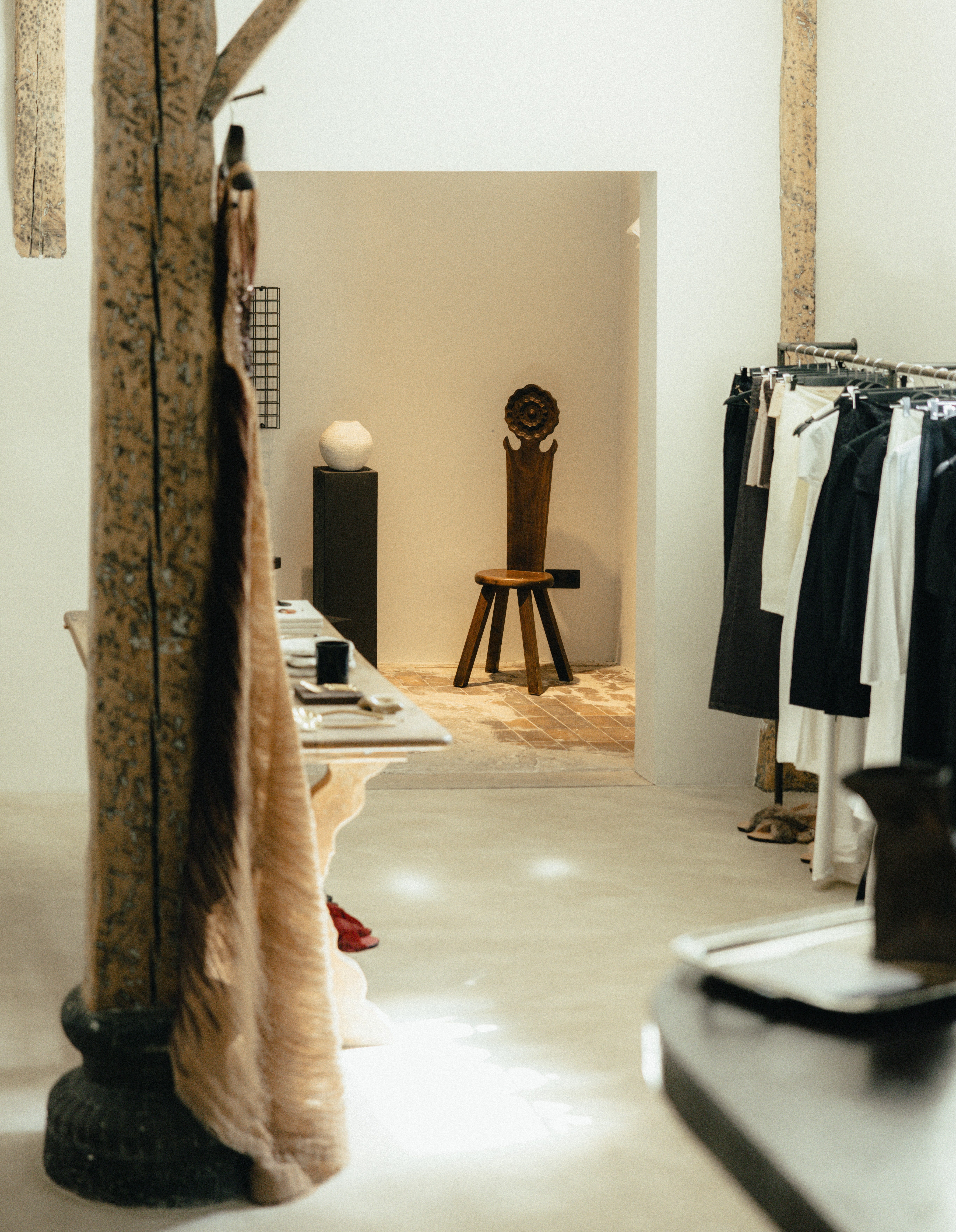
When I first came across El Quadrado, I assumed it was a community space before realizing it was also a store. The energy felt bigger than retail. Somewhere between a gallery, a salon, and the kind of place you wander into for a glass of wine and accidentally leave with a handwoven Bolivian top you’ll keep for years.
That ambiguity is intentional, and a clear reflection of the way Sofía Ortiz moves through the world. Instinct first, logistics later.
⚀
Sofía grew up in Bolivia, the oldest child in a family with clear expectations. Her grandfather, her father, the careers they had built. The path was drawn before she arrived at it. She followed it the way you follow something you have not yet learned to question: all the way to a finance degree, a job at UBS in New York, a life that looked exactly like it was supposed to.
She lasted two years.
“I already know what it is to not be happy with what you do,” she says. “And it was not a way I wanted to live.”
Every day after work, she would leave the bank and run across the street to volunteer at a gallery. A visceral action rather than a strategic one. The feeling of being in that space, around art and objects and people who cared about them, was so different from everything else in her day that she could not ignore what it was telling her. When Covid arrived and the world paused alongside it, she used the stillness to make her decision. She applied to interior design programs, got into Parsons, turned it down when it moved online, and found a master’s program in Madrid instead. She moved there during a pandemic, a city where she had studied abroad and had liked well enough to trust.
Her mother, who had spent Sofía’s entire childhood telling her that whatever she wanted for herself, she could go after it, told her to go.
So she went.
⚀
Her move to Madrid opened doors she hadn't anticipated, the way the riskiest decisions often do. During her master’s, she started noticing something at the edges of the European design world. Latin American artists and designers were gaining traction in Europe, but the infrastructure to bring them into the market properly, with context, care, and the right relationships, barely existed. Sofía became a natural bridge, her finance training coupled with a design sensibility that spent years on the sidelines. She began representing collectible design galleries from Latin America throughout Europe, placing pieces, building connections, learning the market from the inside.
She was good at it, but the energy kept pointing somewhere else. “I was pouring so much love and work into other people’s projects,” she says. “And I thought, if I’m going to work this hard, I want it to be for something that’s mine.”
So in November 2024, she started making calls. She did not have a space. She did not have a name. She did not have a branding agency. But when designers she admired asked if she had a location, she told them it was almost ready. The agency was finalizing the materials and she would send everything over soon. It was a beautiful lie, told in service of something she already knew was true.
“I kind of bullshitted my way in,” she says, laughing. “But I was in the same conversations as buyers from Moda Operandi. So I had to.”
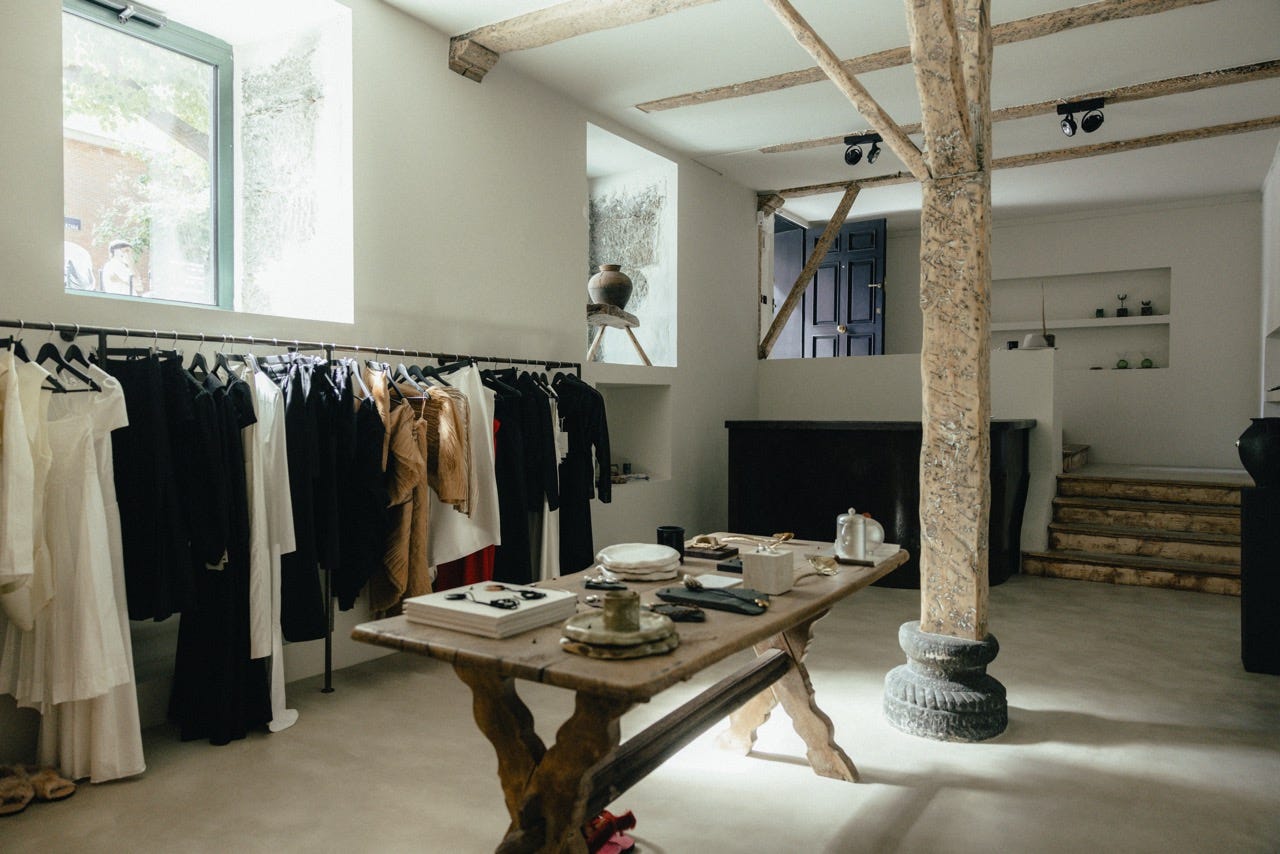
By March she had signed a lease and by July she had opened the store. Three months to build out a space, source inventory across two continents, navigate international import rules for each country she was bringing product from, and learn an industry she had never actually worked in. On opening day, there was a large hole in the wall that wasn’t finished yet.
Nobody noticed.
“If you put yourself in a position where you have to be ready,” she says, “you will be ready. Because you have no other option.”
Her mother spent opening week helping hang the lights.
⚀
The name came on a holiday in Trancoso, Brazil. Every evening after the beach, everyone in town, young and old, locals and visitors, drifted toward the same place. The plaza at the center of the village where you could have a drink, buy a dress, run into someone you hadn’t seen in years, stay until one in the morning because nobody wanted to leave. The plaza was called El Quadrado. The Square. Sofía arrived home, wrote it down, and saved it for when the time came to package the feeling for Madrid.
Not a store or gallery specifically, but a place where things happen. Where people come back. Where the Norwegian student who wandered in one afternoon now brings every friend and family member who visits him in Madrid. Where events have quietly launched other people’s businesses. Where the Latin community in the city, and the international visitors passing through, find something that feels like a shared language.
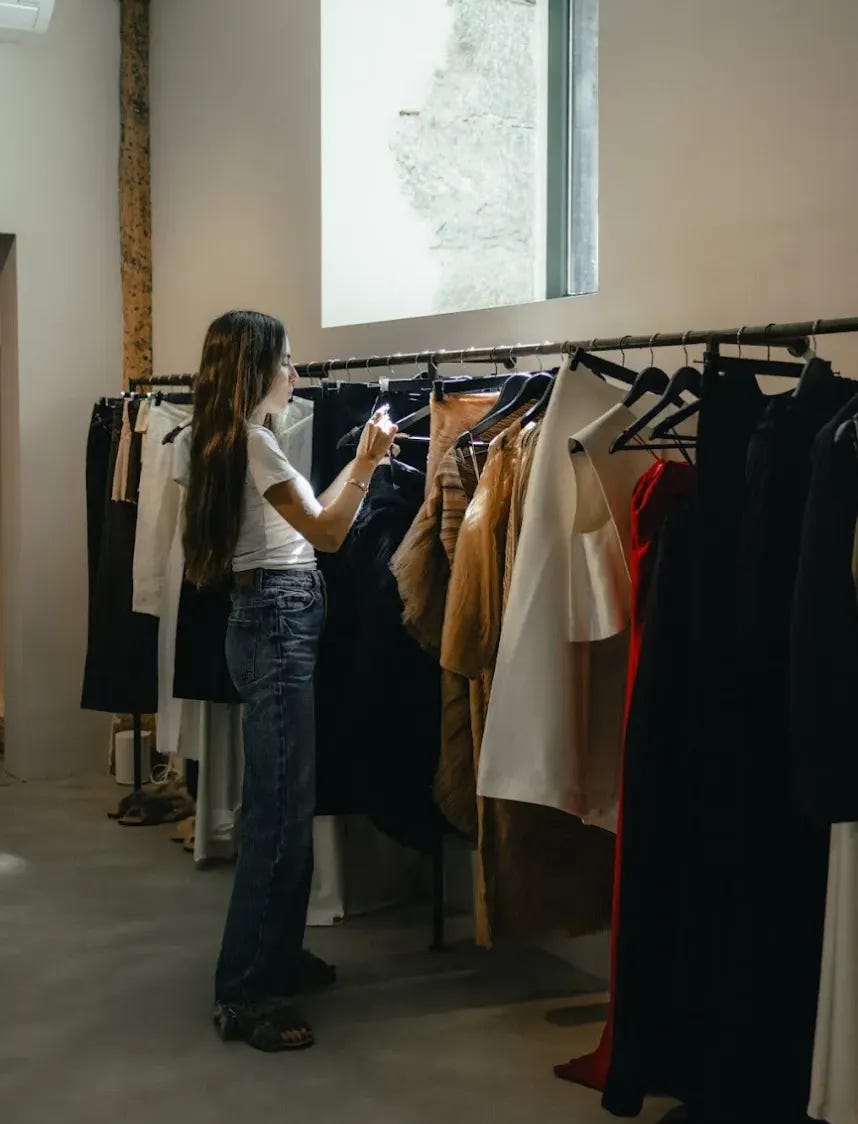
The space reflects everything Sofía has been building toward. Iberian and Latin American designers whose work is sculptural rather than trend-driven, pieces that earn a second look because they don't resemble anything else. Among them, Heirlome, whose Laia Top is hand-crocheted by Madres y Artesanas Tex, a collective of artisan women based just an hour’s flight from where Sofía grew up. Weise, whose fluid, architectural silhouettes and natural fabrics feel like they were made for exactly this kind of room. Colombian designer Natalia Criado, whose tableware Sofía describes with the tone of someone who can't quite believe they exist.
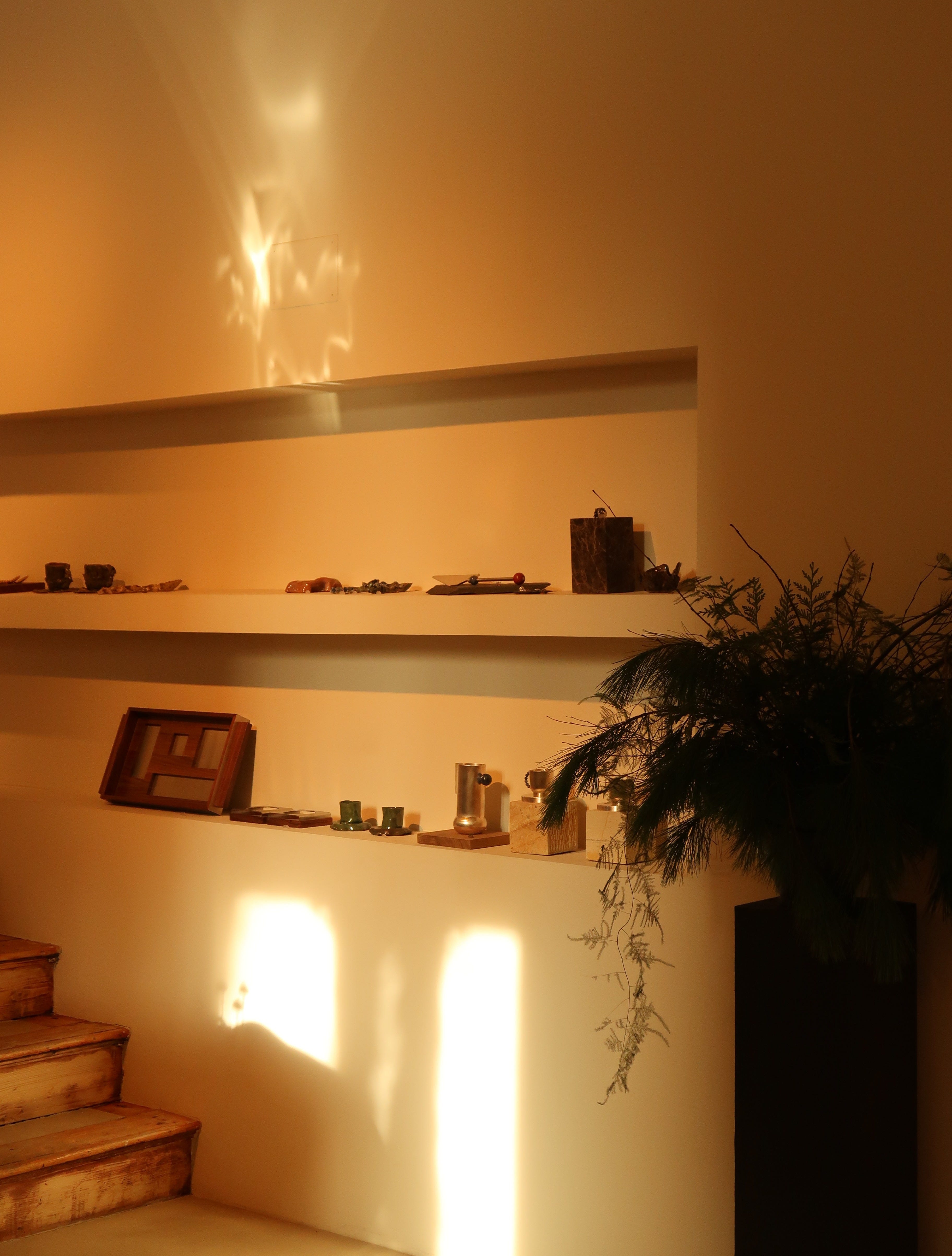
Many of these brands are family-run. Husbands and wives. Mothers and daughters. While Sofía did not plan that, it happened because of who she is drawn to and what she is looking for: not just a beautiful object, but the hands behind it.
“Whenever you buy something from the store,” she says, “the best thing is that there's always a story behind it. So when people either stop you in the street and compliment you or they come to your home and see a beautiful centerpiece, there's a story to it.”
Perhaps most surprising to her was the consistent reaction to the Bolivian pieces. The craftsmanship, the materials, the techniques passed down through generations, they became less visible through familiarity. But watching people from across Europe and the Americas encounter those pieces for the first time and feel something has been one of the unexpected gifts of the whole project.
“We don’t truly appreciate what we have,” she says of her home country. “And then you watch someone else see it and you think, oh. Right.”
⚀
Nine months in, El Quadrado is already becoming more than its walls. A Miami pop-up in February generated enough interest that a more permanent presence there is now on the table. An agency model, representing and connecting artists across disciplines, is something Sofía is actively developing. She always intended the name to hold more than one room.
When I asked what she would tell someone sitting with their own version of what she had felt, a restlessness, a creative pull, a life that doesn't quite fit, she answered, as usual, without pretense.
“I hate the feeling of regret,” she says. “I’d rather say I went for it and it didn’t work. I already know what the alternative feels like. I already know what it is to wake up not excited. And it’s not a way I wanted to live.”
Her father has a saying she has never forgotten. Lo bueno no es amigo de lo perfecto. What is good is not friends with perfect. She has built her life, and now her business, around that belief.
What Sofía has created is not just a store or a gallery or a community space, though it is all three. It is an argument for trusting your instincts before you fully know where they are taking you. For believing in the beauty of where you come from. For understanding that the most magnetic spaces, and the most magnetic people, are usually the ones who started before they were ready and figured it out on the way.
The hole in the wall gets fixed eventually. The store opens anyway.
Thank you for being here,
Kelly
Such an inspiring story 🤍