
Once a Muse, Forever a Muse
On the women who shaped fashion, culture, and the way we see ourselves.
You do not need to be a fan of fashion or the industry to understand its power. Much like art hanging on the walls of a museum, a runway show can act as a portrait of a moment in time. It reflects shared beliefs, values, and, at times, the quiet frustrations of a society.
Fashion has long been a boundary breaker. It opened doors for women to build careers before that path was widely accepted. It created spaces where queer people could express themselves freely. In a world where many industries remain dominated by a single archetype, you do not need to “get” fashion to respect its impact. Art, culture, society. It shapes us whether we are paying attention or not.
Recently, I have begun a deeper exploration of fashion history. After stepping away from the industry over the past few years, I have felt reinvigorated by the art and cultural weight that fashion carries. But what feels most important is understanding what shaped it. To truly understand anything, you have to understand its evolution.
Through this process, I have found myself rediscovering some of fashion’s greatest muses. Male designers and creative directors who were so deeply inspired by the women around them that they allowed those women to influence their most iconic collections. Yves Saint Laurent. Tom Ford. Azzedine Alaïa. Karl Lagerfeld. Each had multiple muses they designed for. While some of these women remain lesser known, their influence is undeniable.
Loulou De Falaise
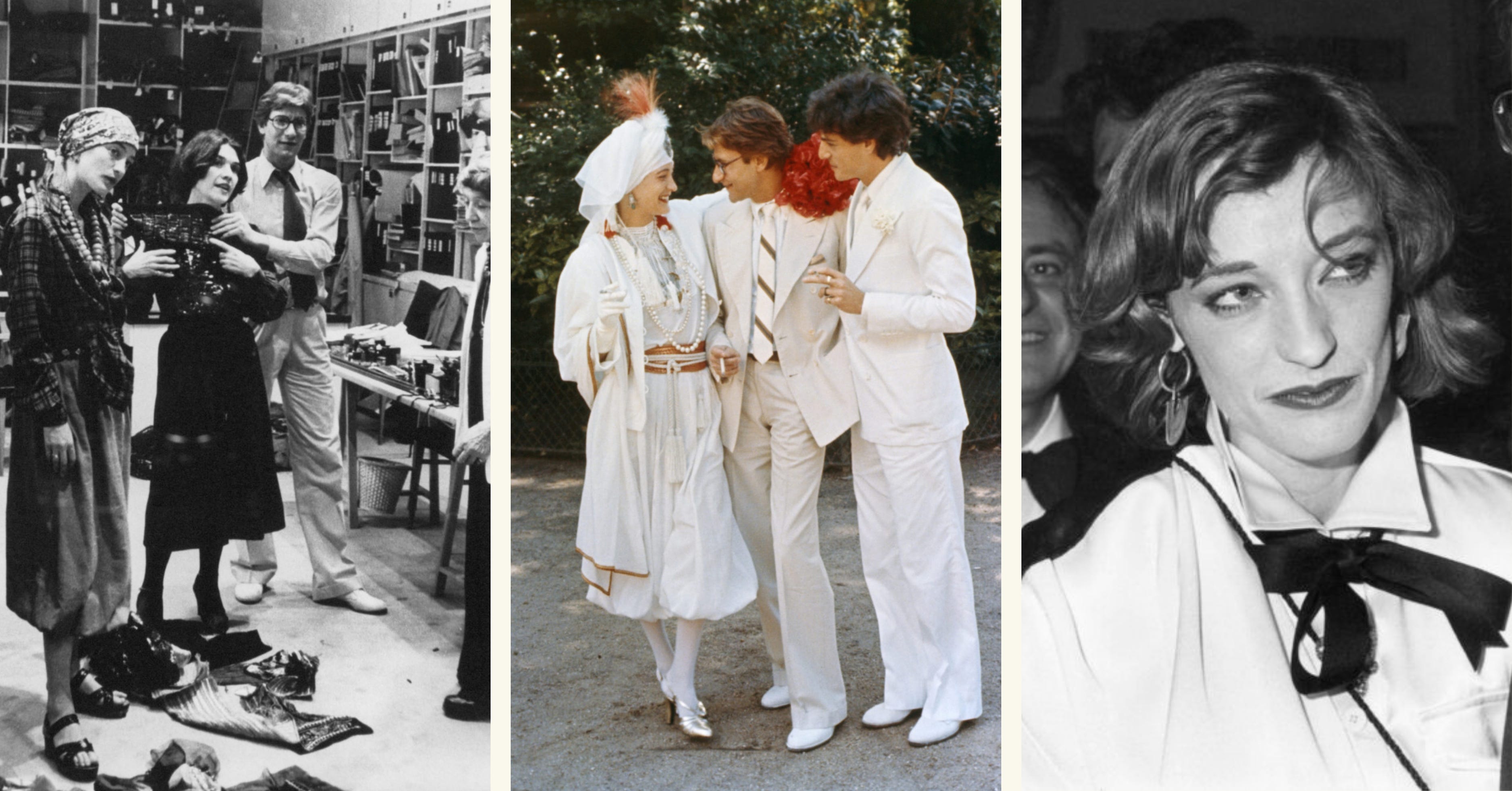
Loulou de la Falaise was born into fashion. Her mother worked for Elsa Schiaparelli, and her father was a French aristocrat. She later became one of Yves Saint Laurent’s closest friends, remaining by his side for over thirty years.
In the late 1960s, she moved to New York, modeling for Vogue before designing prints for Halston. While working as a fashion editor in 1968, she reconnected with Saint Laurent, captivating him with her warmth, instinctive style, and flea-market sensibility. She was soon placed in charge of accessories for the house, though her role extended far beyond titles. While another of Saint Laurent’s most referenced muses, Betty Catroux, favored restraint and was most often dressed in black, she credited Loulou as their “pick-me-up,” a source of color, energy, and optimism.
Loulou’s intuitive eye became essential to Saint Laurent’s creative process. She understood the woman he designed for because she was that woman. Her influence lived not only in jewelry and accessories, but in the spirit of the collections themselves.
Farida Khelfa
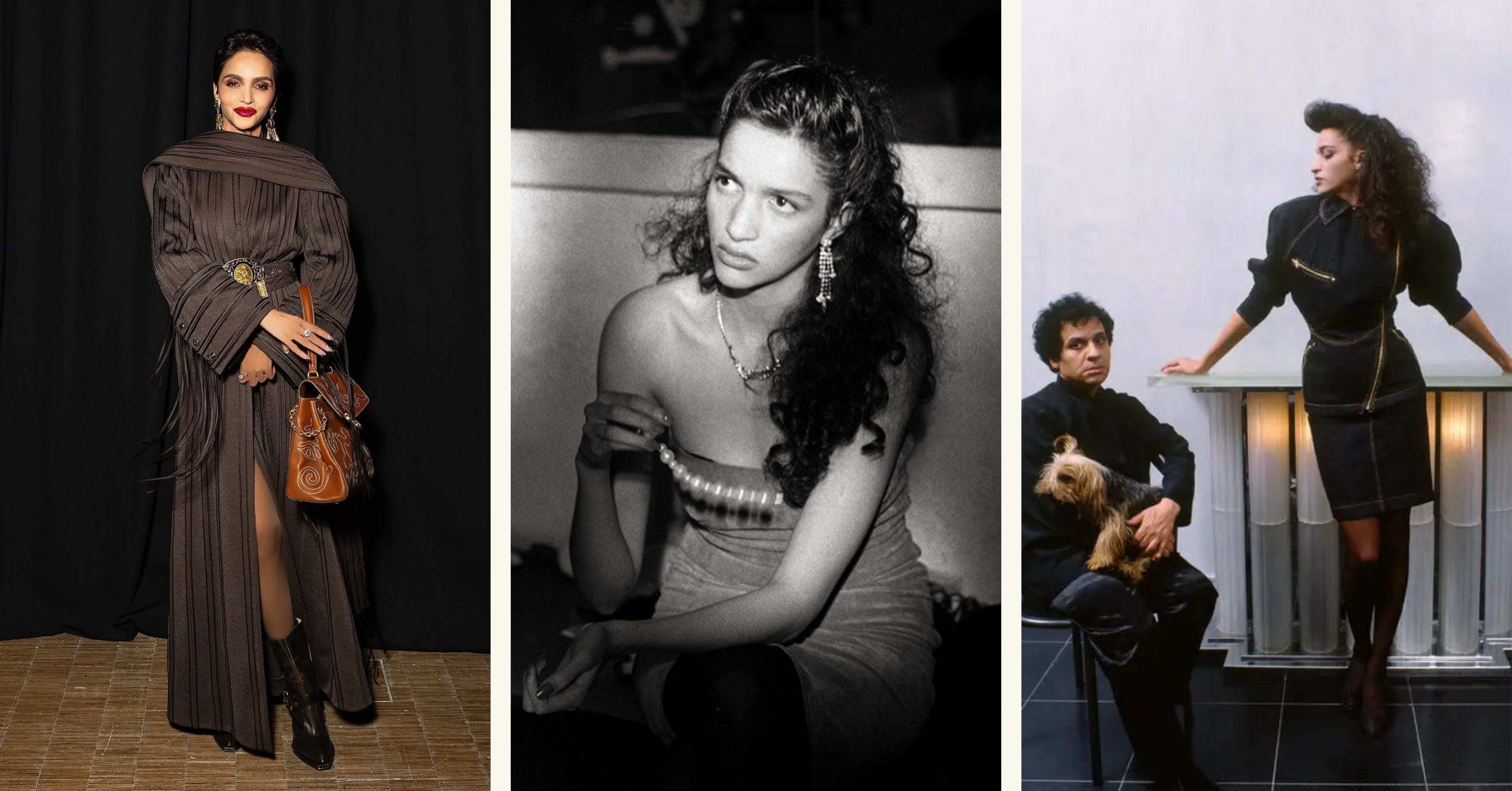
Muse to both Azzedine Alaïa and Jean Paul Gaultier, Farida Khelfa’s modeling career may have opened doors, but it was her creative vision that secured her place in the upper echelon of Parisian fashion culture.
Born to Algerian parents and raised in a housing project in Lyon alongside her ten siblings, Khelfa left home at sixteen and made her way to Paris. She found both refuge and community at The Palace, the legendary nightclub that served as a crossroads for artists, designers, and cultural provocateurs shaping Paris at the time.
It was there that she met a fifteen-year-old Christian Louboutin, who offered her a place to stay at his mother’s apartment, where she remained for months. At The Palace, she was also introduced to Jean Paul Gaultier, who asked her to model for him. He later said of Khelfa, “To me, she embodies beauty.” Her relationship with the house evolved over time, eventually leading her to become Couture Director.
Photographer Jean-Paul Goude later introduced Khelfa to Azzedine Alaïa. The two formed a deep bond rooted in their shared North African heritage and cultural understanding. Alaïa encouraged her to expand beyond modeling, giving her the confidence to step into a more influential creative role. She would eventually lead the design studio, shaping collections from the inside.
More recently, Khelfa has served as a muse for Schiaparelli, a fitting continuation of a life defined not by visibility alone, but by influence, instinct, and enduring creative power.
Betty Catroux
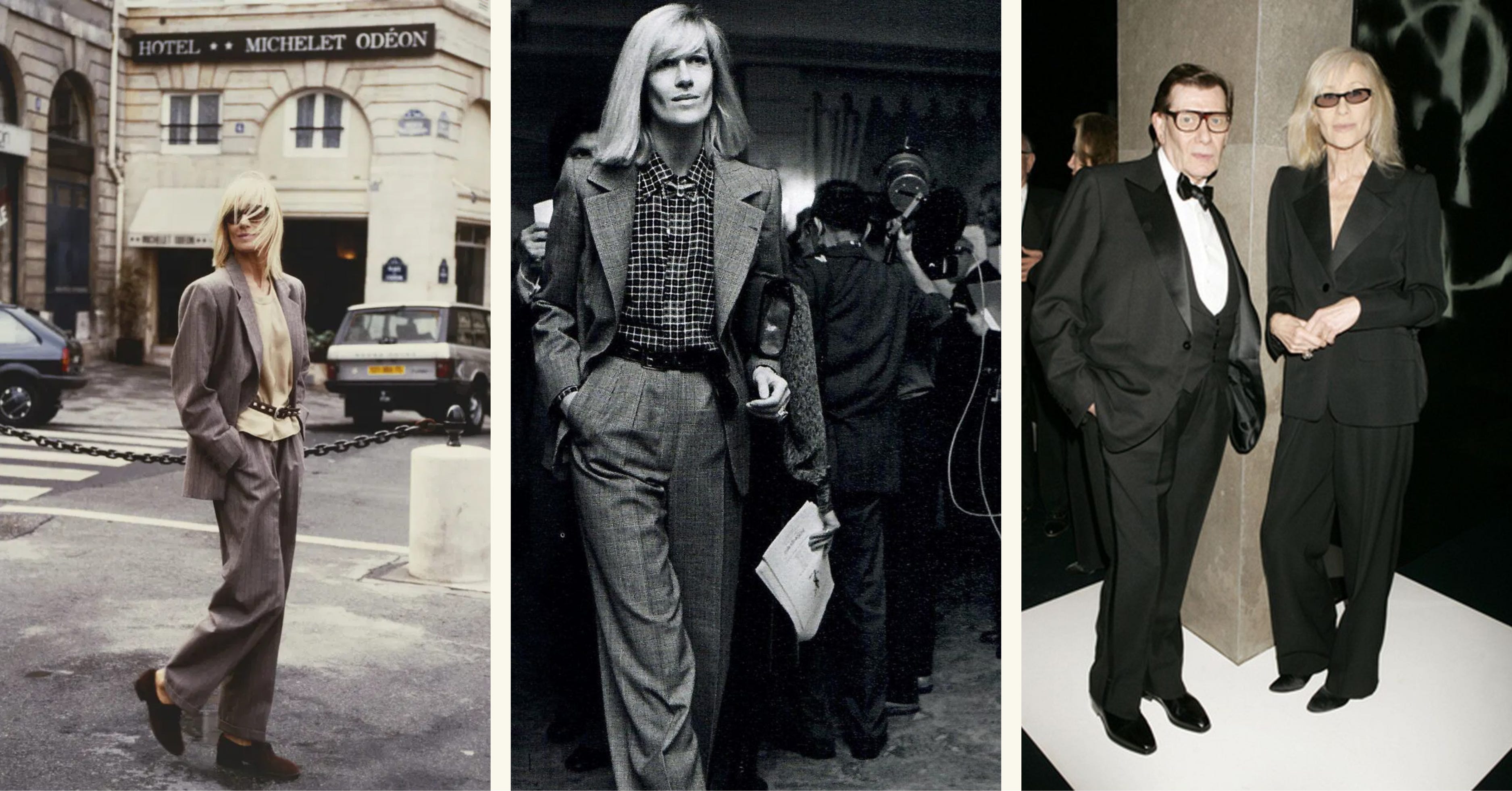
Betty Catroux met Yves Saint Laurent in 1967. Both tall, blonde, and strikingly thin, her androgynous presence embodied the couturier’s physical and emotional ideal. They formed an immediate and unbreakable bond, often referring to one another as “twins.”
As a teenager, Catroux crossed paths with Coco Chanel and briefly worked around the house as a model. She later described the experience as humiliating and left fashion altogether, turning to photography to support herself.
It was Saint Laurent who offered her a different kind of influence. Though never formally employed by the brand, Catroux became one of his most enduring muses, shaping his vision of modern femininity from the outside. What set her apart was her indifference to fashion itself. Uninterested in trends or spectacle, she developed an effortless style that resisted both masculine and feminine codes, most often donned in black.
She became one of the living embodiments of Le Smoking, the tuxedo that redefined women’s power dressing, and a lasting symbol of Saint Laurent’s belief that strength and elegance were inseparable. Decades later, Tom Ford dedicated his debut YSL Rive Gauche collection to her, calling her “the ultimate Saint Laurent woman.”
In 2020, Anthony Vaccarello honored her legacy with the exhibition Betty Catroux, Yves Saint Laurent: Féminin Singulier, cementing her place not just as a muse, but as a cultural figure whose influence spans generations.
Lee Radziwill
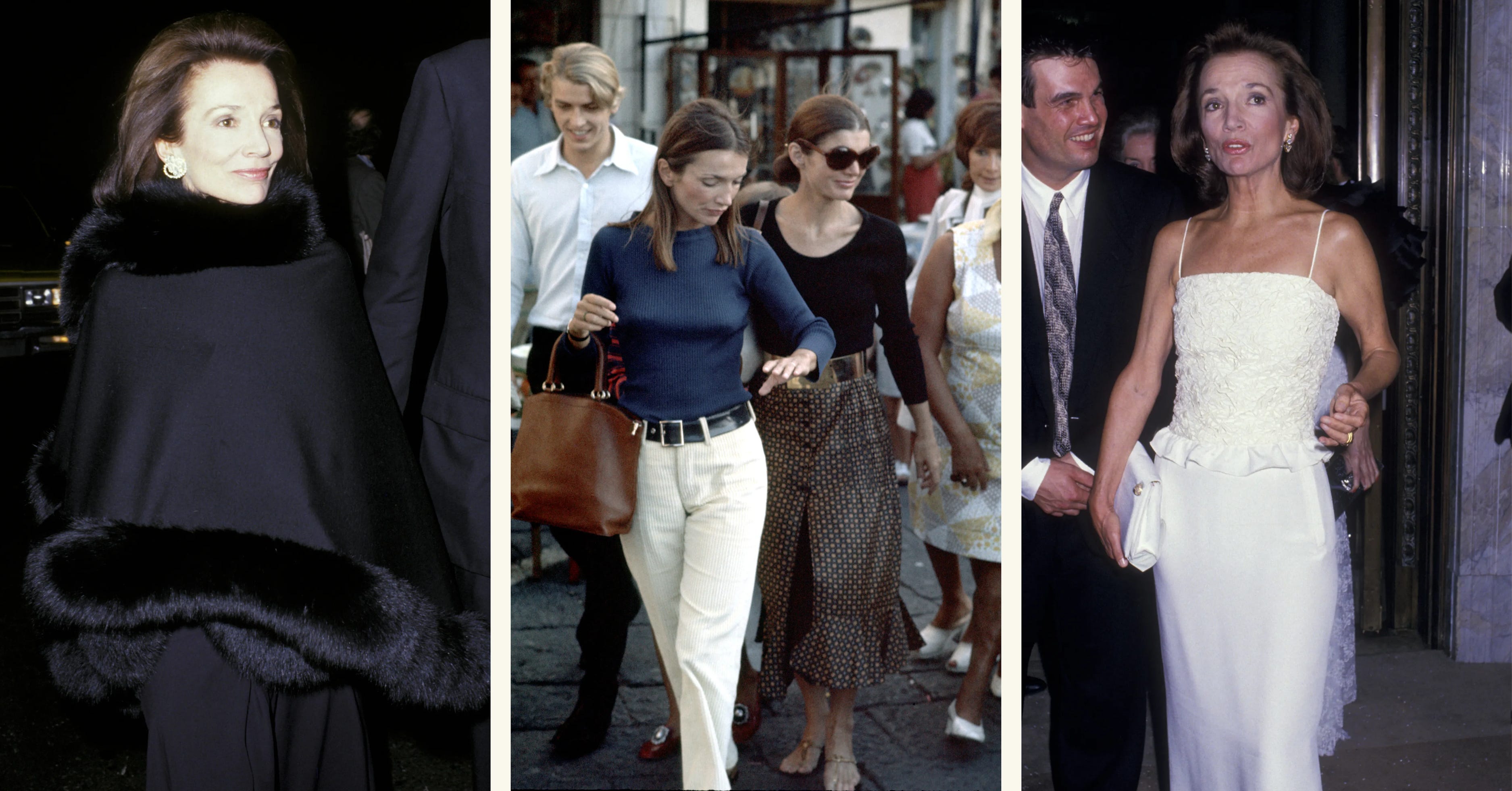
American socialite Lee Radziwill was the younger sister of former First Lady Jacqueline Kennedy, though she spent her life carefully avoiding being defined by that proximity alone. Where Jackie embodied diplomacy and restraint, Lee moved with a quieter, more personal elegance.
Her style was timeless, composed, and deeply instinctual. She favored clean lines over embellishment, allowing exceptional fabrics, proportion, and tailoring to do the work. Her clothes never overwhelmed her. They appeared to belong to her, shaping the body with ease and intention rather than spectacle.
Radziwill’s influence stretched far beyond her social circle with designers repeatedly cited her as a reference point rather than a traditional muse. Tom Ford often referenced her as the embodiment of understated glamour. Marc Jacobs admired her ability to make simplicity feel personal and modern. Tory Burch has spoken to the lasting relevance of her refined, lived-in elegance.
What made Lee Radziwill enduring was not visibility, but discretion. She dressed for herself, not the moment, and in doing so became a lasting reference for women who value confidence over performance. Her legacy lives in the idea that true style is not declared. It is quietly understood.
Jacqueline de Ribes
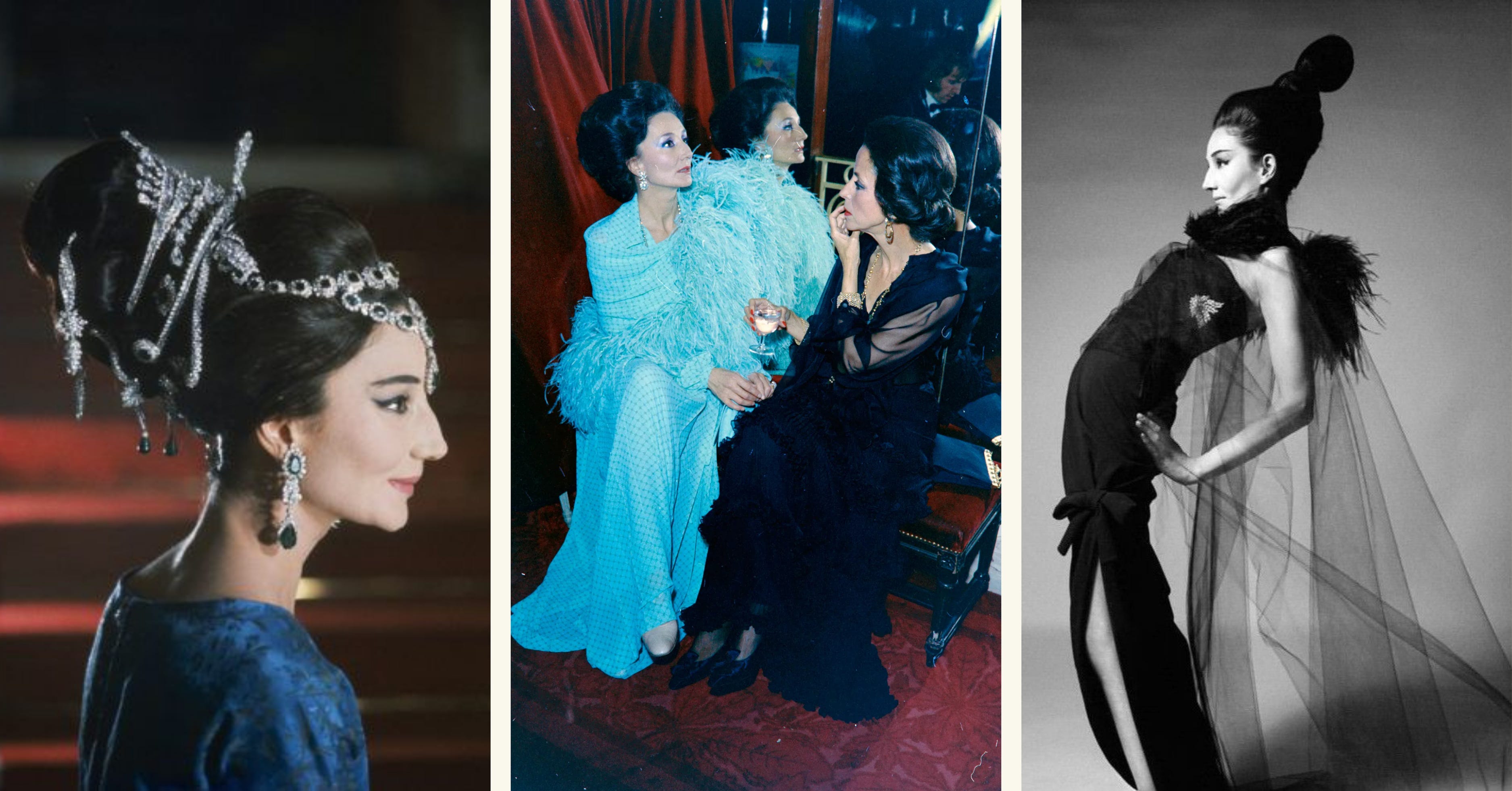
Jacqueline de Ribes was deliberate, theatrical, and fully in control of how she was seen. She once said she dressed “to be remembered,” a statement that reads less as vanity and more as authorship. Every look was composed with intention. Nothing was accidental.
Born into French aristocracy, de Ribes understood early on that style could function as power. She treated clothing as a language, using proportion, color, and drama to construct an image that was unmistakably her own. Long before personal branding was a concept, she was practicing it with precision.
She served as a muse to Yves Saint Laurent and Karl Lagerfeld, both of whom recognized her instinctive understanding of silhouette and spectacle. Yet de Ribes was never content to exist solely as inspiration. In the late 1980s, she founded her own couture house, translating her visual authority into ownership.
Her designs reflected the same sensibility she embodied. Bold, graphic, and unapologetically elegant, they carried a sense of drama without excess. De Ribes proved that a muse could also be a maker, and that self-curation could evolve into creation.
What set Jacqueline de Ribes apart was her refusal to disappear behind the myth. She did not simply inspire fashion. She directed it. Her legacy lives in the idea that style, when wielded with intelligence and intention, can become a form of lasting influence.
I find nothing more compelling than the people who inspire art and culture. Those whose experiences and preferences shaped their style, and whose style ultimately shaped popular culture.
While these women’s influence peaked throughout the 1970s and 1980s, their presence continues through the archival references that shape fashion today.
Which leaves us with a question. Are there any great modern muses alive today? I will have to report back once I spend more time in this decade.
Who’s your muse?
À bientôt,
Kelly