
What Happens When You Stop Wanting to Be Right

“Be confident in the depth of your curiosity, not the depth of your knowledge.”
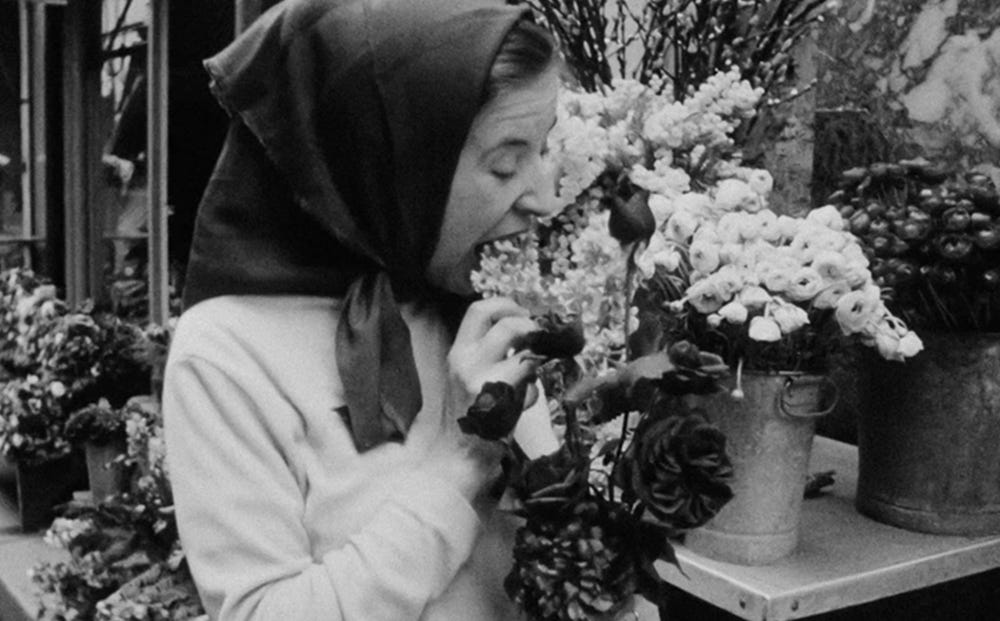
It’s a funny human conflict. We all know that no one really knows what they’re doing, and yet at the same time, everyone wants to be right. The ego tells us that the more we know, the better we are. And the more we can prove it, the more valuable we become.
I’ve been thinking about what happens when you turn that on its head.
I read this quote months ago and keep coming back to it, usually in moments when I feel frustrated with the people around me. My instinct, more often than I’d like to admit, is to assume I’m right. That my answer and my way of doing things is the correct one. That if everyone else could just get on my page, we’d be better off. I can catch it now and course correct, but it’s still there. And it narrows things.
A great deal of our lives is spent in collaboration and in proximity to other people’s minds. We learn from each other, build together, and grow alongside each other. But the moment it becomes my way or the highway, the exchange ends. You stop listening and start waiting.
⚀
I’ve always wanted to know everything. And more than that, I’ve been scared of what it means when I don’t. There’s a kind of grace in that uncertainty that I’m only now starting to understand.
For a long time, I filled the space with answers, opinions, and certainty. It’s exhausting. It feels like constantly trying to stay one step ahead of the moment you’re exposed for not knowing. And in doing that, I missed out on something better.
The conversations that flow. The ones where you ask one more question instead of offering a conclusion. Where your perspective shifts mid-sentence because you’re paying attention. Where ideas form that no one could have arrived at alone.
That only happens when no one is trying to win.
⚀
The people I’m most drawn to now aren’t the ones with the fastest answers. They’re the ones paying attention. The ones who ask questions that slightly disarm you, or make you rethink something you thought you understood. The ones who are comfortable not immediately knowing.
I felt this most clearly from the most successful person I know. The CEO of a multi-billion dollar company and arguably one of the most powerful people in his industry. Not the path we’re building at C’est Cool, but undeniably a version of success.
You’d assume he got there by being the smartest person in the room. But that’s not what I’ve seen. I believe it’s because of his curiosity.
He doesn’t rush to insert his opinion or prove his intelligence. He asks questions. He leans on people who know more than he does. He builds through them. When he does speak, it’s because he actually has something he cares to say. Not because he feels the need to fill space.
There’s a level of confidence in that that feels entirely different.
⚀
That’s the shift I keep coming back to. Not trying to be the one with the answer, but becoming someone who knows how to stay in the question a little longer.
Letting a conversation breathe instead of steering it. Asking one more question before offering a point of view. Being willing to say “I don’t know” without rushing to cover it. Trusting that something better tends to come from that place.
I think that’s also part of what we’re building with C’est Cool. Not a space where people perform what they know, but one where curiosity has room to lead. Where taste is shaped through exploration over expertise.
The most interesting work, the kind that actually moves culture forward, rarely comes from someone trying to prove they’re right. It comes from someone willing to follow a question a little further than everyone else.
And if we are all really connected, curiosity changes how we meet each other. And ourselves.
What’s driving your curiosity? What questions are you sitting on?
<3 Kelly
Love this